• About
    • Awards
  • Publications
    • Books in print
  • Contact

James Reaney

  • Steady Theatre scores with Listen to the Wind

    February 21st, 2020

    February 5, 2020 — Congratulations to Steady Theatre Collective and director Julia Schultz for your ingenious production of James Reaney’s 1966 play Listen to the Wind.

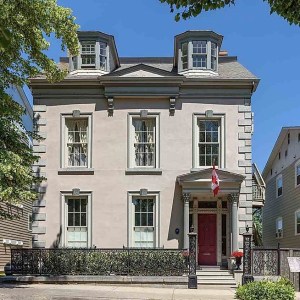
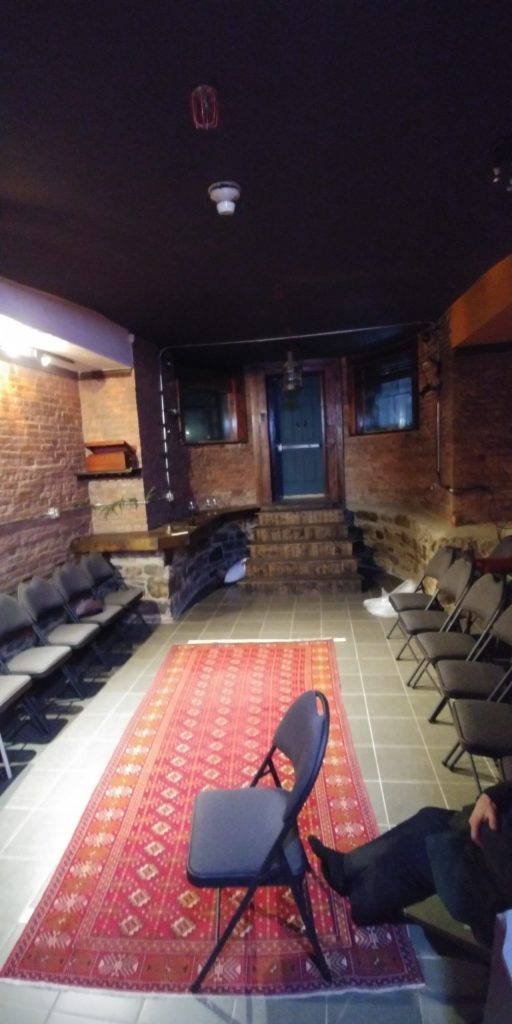
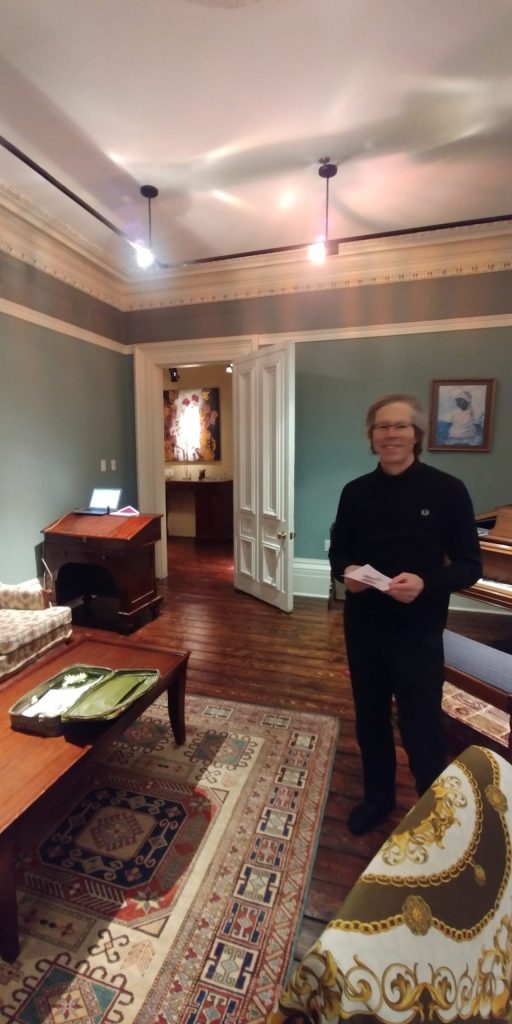
    The production was staged at McCully House, an old Halifax mansion, allowing the audience to move through the house and through the play – Act I in the attic, down to the lower floor for Act II, and back up to the attic for Act III.

    McCully House, 2507 Brunswick Street in Halifax, Nova Scotia
    McCully House, 2507 Brunswick Street in Halifax, Nova Scotia

    The web of actors, music, and intimate setting kept us close to the action and drew us into the world of Owen, Harriet, Ann, and Jenny, the four children who put on the play. Four chairs can be anything!

    Producer: Kirsten Bruce
    Director: Julia Schultz
    Music: Edie Reaney Chunn
    Stage Manager: Sophie Schade
    Set and Costume Designer: Emma Roode
    Fight Choreographer: Anika Riopel
    Weathervane designed and crafted by Kelly Trout

    Cast: Lou Campbell, Henricus Gielus, Kyle Gillis, Stepheny Hunter, Brittany Kamras, Michael Kamras, Rachel Lloyd, Briony Merritt, Noella Murphy, Peter Sarty, and Sam Vigneault

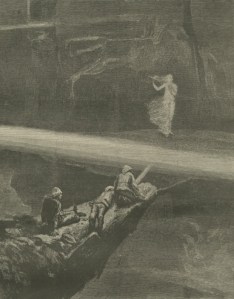
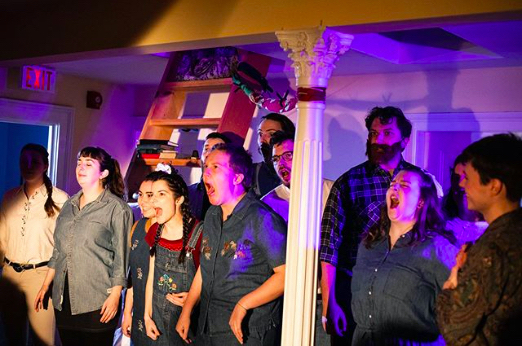
    Act I Scene 2: Owen & Chorus: Let’s hear the North Wind. (Rehearsal photographs courtesy Steady Theatre)
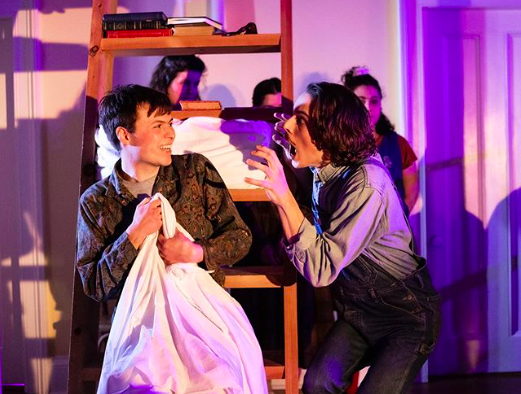
    Act III Scene 44: Sam Vigneault as Owen and Peter Sarty as Mitch

    OWEN: … Mitch, sit down and talk to me.
    MITCH: Will I do your favourite cartoon?
    OWEN: Yes. Now you rock in the rocking chair and I say… (gets off the bed)
    Grandma, how about  a dime so I can get an ice cream cone and cool myself off?
    MITCH: Ah, I’ll tell you a ghost story instead son. It’ll freeze your bones and chill you off twice as fast. Listen!
    More about Steady Theatre Collective and the play

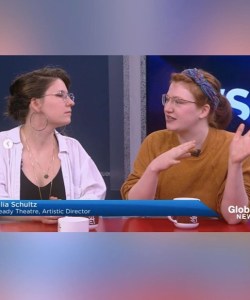
    Steady Theatre Collective’s Kirsten Bruce and Julia Schultz

    Interview with Producer Kirsten Bruce and Director Julia Schultz in Halifax January 29, 2020:  https://globalnews.ca/video/6477010/steady-theatre-collective

    What reviewers are saying:

    The Coast: https://www.thecoast.ca/halifax/the-steady-theatre-co-steers-on/Content?oid=23416845

    The Way I See It Theatre Blog: http://www.twisitheatreblog.com/take-a-moment-to-listen-to-the-wind/

    For more about the play, see “James Reaney’s Listen to the Wind in Halifax February 4-9”: https://jamesreaney.com/2020/01/25/james-reaneys-listen-to-the-wind-in-halifax-february-4-9/

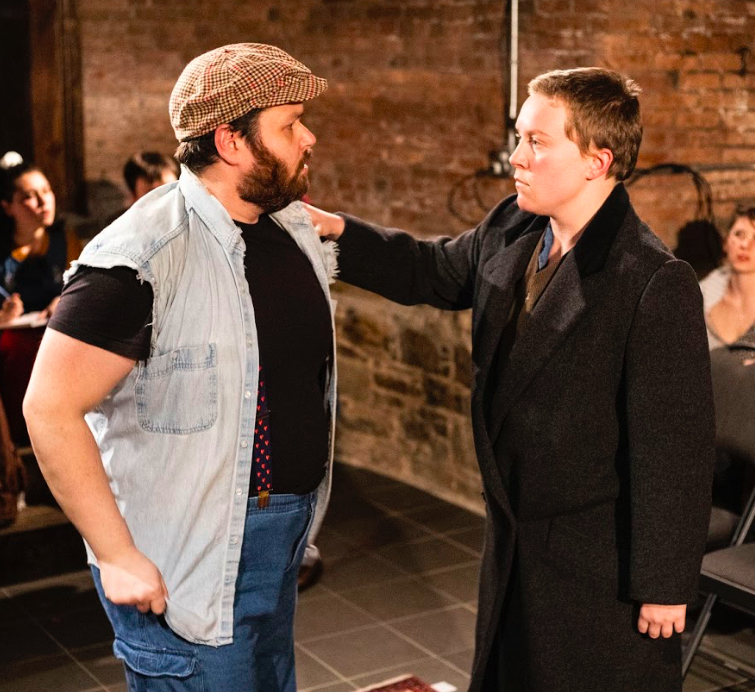
    Listen to the Wind Act II: Rogue and Douglas
    Listen to the Wind Act II: Angela, Arthur & Sir Edward
    Listen to the Wind: Lower floor McCully House
    Listen to the Wind: Front of house reception area
    James Reaney’s illustrated story The Boy Who Lived in the Sun on view in the reception area

  • James Reaney’s Listen to the Wind in Halifax February 4-9

    January 25th, 2020

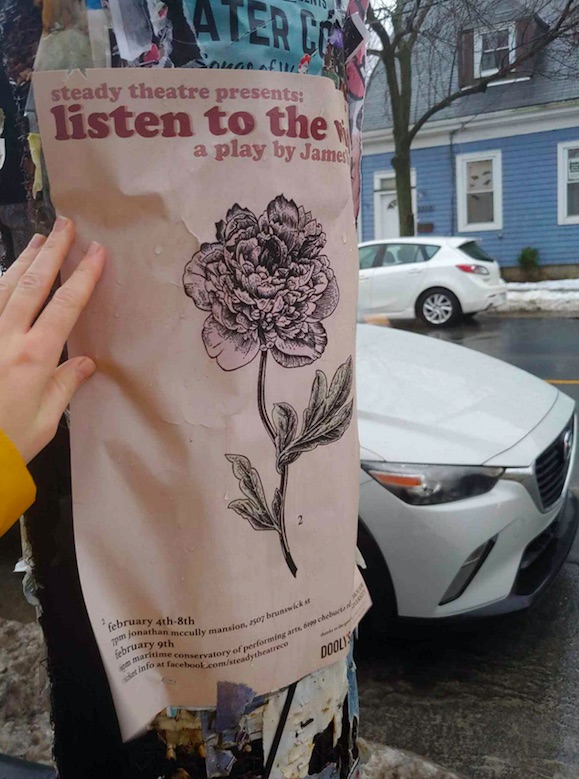
    On February 4-9 in Halifax, Steady Theatre will present Listen to the Wind, a play by James Reaney.

    With the help of their families and neighbours, four children put on The Saga of Caresfoot Court – a melodrama set in a old manorhouse.

    “… We watch a double story: Owen fighting illness and trying to get his parents together again; Angela Caresfoot threading her way through a world of evil manorhouses and sinister Lady Eldreds. The two stories illuminate each other….” James Reaney, 1966 Program Notes

    When & Where: February 4 to 8 at 7:00 pm at the Jonathan McCully Mansion, 2507 Brunswick Street, Halifax B3K 2Z5

    February 9 at 6:00 pm at the Maritime Conservatory for the Performing Arts, 6199 Chebucto Road, Halifax B3L 1K7

    Tickets: To order tickets and for details about accessibility at the two locations, see the TicketHalifax page: https://www.tickethalifax.com/events/104629667/listen-to-the-wind

    James Reaney’s 1966 play Listen to the Wind is available from Talonbooks: https://talonbooks.com/books/listen-to-the-wind

    James Reaney (Photo courtesy Talonbooks)

  • Songs of London Poetry and Painting with Serenata Music on January 18

    January 6th, 2020

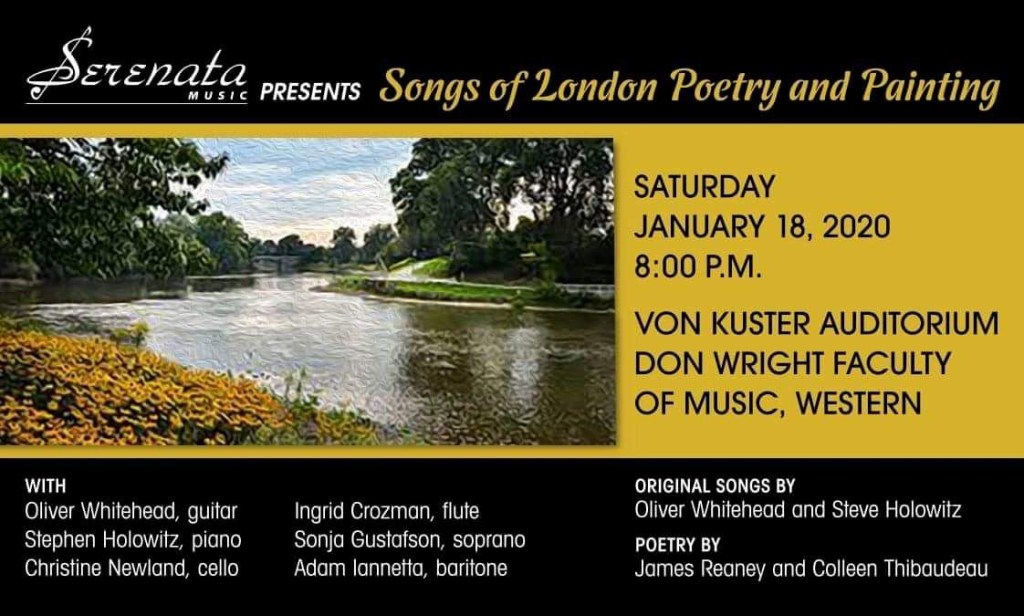
    Join us on Saturday January 18 at 8:00 pm at Western’s von Kuster Auditorium for a musical evening of “Songs of London Poetry and Painting” by local composers Oliver Whitehead (guitar) and Steve Holowitz (piano). 

    Inspired by poems and art with a Southwestern Ontario connection, Whitehead and Holowitz have set to music poems from James Reaney’s Souwesto Home and Colleen Thibaudeau’s The Artemesia Book.

    The performers are London musicians Sonja Gustafson, soprano, and Adam Iannetta, baritone, along with  Ingrid Crozman on flute and Patrick Theriault on cello (replacing Christine Newland). 

    When & Where: Saturday January 18, 8:00 pm, von Kuster Auditorium, Don Wright Faculty of Music, Western University

    Tickets are available at the door or online from the Grand Theatre Box Office and OnStageDirect. Students $20 and Adults $40

    For more about upcoming concerts and events, visit Serenata Music: http://serenatamusic.com

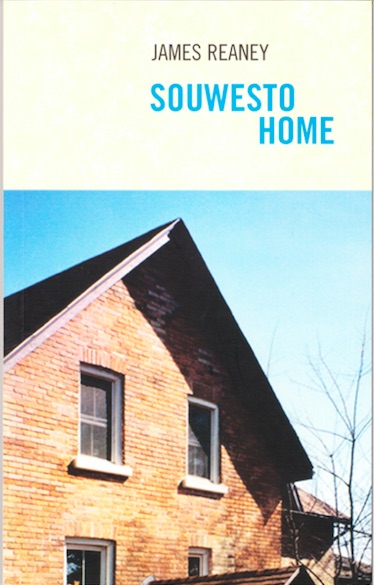
    Souwesto Home, Brick Books 2005
    James Reaney and Colleen Thibaudeau near Stratford, Ontario, 1982.
  • Wordsfest 2019: Stan Dragland on “James Reaney on the grid”

    November 21st, 2019

    Saturday November 2, 2019 — Thank you all for joining us at Wordsfest at Museum London for the Tenth Annual James Reaney Memorial Lecture, and thank you, Stan Dragland, for coming all the way from St. John’s, Newfoundland to share your thoughts on James Reaney’s use of structure or “grids of meaning.”

    Stan Dragland’s lecture “James Reaney on the grid” November 2, 2019 at Wordsfest in London, Ontario.

    In his lecture James Reaney on the grid, Stan Dragland explains how Reaney drew material from the local and particular and used archetypal patterns to link and clarify it:

    What about the grids? “Grid” is not Reaney’s own word, of course. He picked it up from others at the long-liner’s conference [a 1984 conference on the Canadian long poem], and the literal meaning, with all those right angles, is not the best image for what he does. He’d be more likely to say pattern, or formula, or catalogue, or paradigm, or list. Also backbone. I’ll keep on with grid here, but really list is the better word.

    “There is something about lists that hypnotizes me,” Reaney says, introducing the “Catalogue Poems” section of Performance Poems [1990]. Now watch how he slides disparate things together in metaphor as he goes on: “I think this fascination is connected with our joy in the rainbow’s week of colours, in the 92 element candle you see in a physics lab at school, but then see all around you like a segmented serpent we’re all tied together by. Our backbones, with their xylophone vertebrae, are such sentences; lists of symbolic objects in some sort of mysterious, overwhelming progression I have elsewhere called the backbones of whales, and indeed they are, for they are capable of becoming a paradigm . . . used as a secret structure.” His play, Canada Dash, Canada Dot [1965] is built on lists of various sorts. So is Colours in the Dark [1967]. In fact lists or catalogues are everywhere in his work…

    A video of Stan Dragland’s lecture is available here, and the full text version is here.

    About the speaker

    Stan Dragland’s immersion in James Reaney’s work began in 1970 when he arrived in London to teach at the University of Western Ontario. One of the first courses he taught was English 138 Canadian Literature and Culture, a team-taught course designed by James Reaney. Stan Dragland is also a co-founder of Brick Books, a local poetry press now celebrating its 45th anniversary.

    Souwesto Home by James Reaney, 2005, Brick Books.

    The James Reaney Memorial Lecture series celebrates the life and work of Southwestern Ontario poet and dramatist James Reaney, who was born on a farm near Stratford, Ontario and found a creative home in London, Ontario.

    Our thanks to Wordsfest and the London Public Library for their support of the lecture series, and to Poetry Stratford and the Stratford Public Library for their support in hosting the earlier lectures (2010-2015).

    2010: Colleen Thibaudeau
    2011: Marion Johnson and Peter Denny
    2012: Jean McKay
    2013: David Ferry
    2014: Tim Inkster
    2015: Thomas Gerry
    2016: John Beckwith
    2017: Tom Smart
    2018: James Stewart Reaney
    2019: Stan Dragland

  • James Reaney Memorial Lecture: November 2 at Wordsfest

    October 16th, 2019
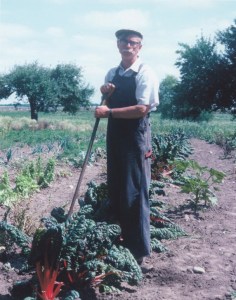
    James Reaney at the farm near Stratford, Ontario, Summer 1979. (Photo by Les Kohalmi)

    Join us at Wordsfest on November 2, 2019 at 12:00 pm at Museum London’s Lecture Theatre for the 10th annual James Reaney Memorial Lecture.

    Stan Dragland, poet, novelist, and literary critic, will speak on James Reaney’s love of lists and how he uses them to express his vision, particularly in plays like The Donnellys.

    Styling his lecture as “James Reaney on the grid”, Dragland explores how Reaney’s immersion in his local environment brings forth the universal in his art.

    James Reaney’s The Donnellys: Sticks and Stones Act I
    Mr Donnelly: And this earth in my hand, the earth of my farm
    That I fought for and was smashed and burnt for
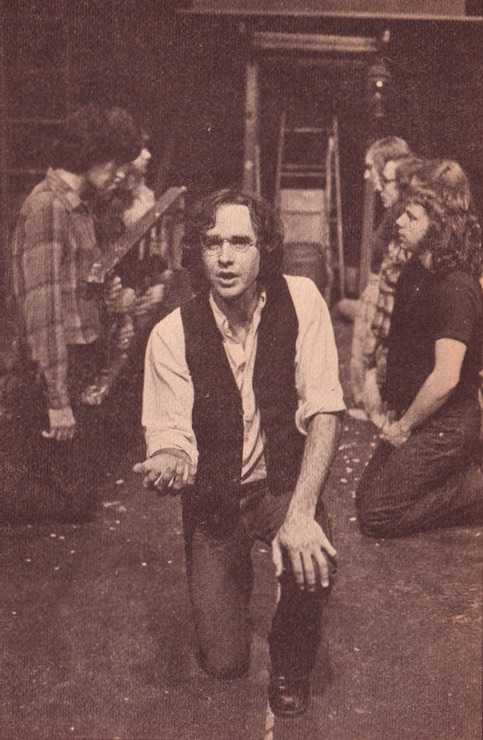
    (Jerry Franken as Mr Donnelly, Tarragon Theatre, 1973)

    When: Saturday November 2 at 12:00 pm
    Where: Wordsfest at Museum London, 421 Ridout Street, London, Ontario
    Admission is free.

    Earlier Wordsfest lectures on James Reaney:

    2016: John Beckwith on James Reaney and Music
    2017: Tom Smart on James Reaney: The Iconography of His Imagination
    2018: James Stewart Reaney on James Reaney’s Plays for Children

    The James Reaney Memorial Lecture series celebrates the life and work of Southwestern Ontario poet and dramatist James Reaney, who was born on a farm near Stratford, Ontario and found a creative home in London, Ontario.

    Our thanks to Wordsfest and the London Public Library for their support of the lecture series, and to Poetry Stratford and the Stratford Public Library for their support in hosting the earlier lectures (2010-2015).

    Souwesto Home by James Reaney, 2005, Brick Books.
  • James Reaney’s The Boy Who Lived in the Sun

    September 1st, 2019

    (Reposted from July 2, 2013)

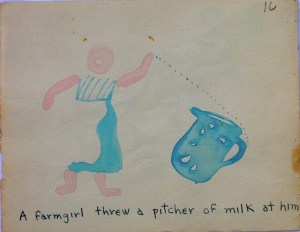
    In the summer of 1961, James Reaney wrote and illustrated a story for children called The Boy Who Lived in the Sun. He made 36 watercolour illustrations to go with the text, stitched them together, and for many years it was only shared with family and friends.

    In the story, a boy who lives in the sun dreams of going to earth to meet other children. He discovers that it’s not easy for a luminary being to have contact with humans, and that the process of becoming human will require lengthy and celestial labour on his part.

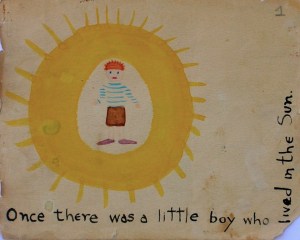
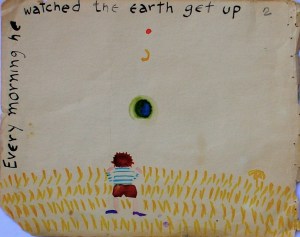
    Once there was a little boy who lived in the Sun.     (Illustration and text by James Reaney, 1961)

    Every morning he watched the earth get up

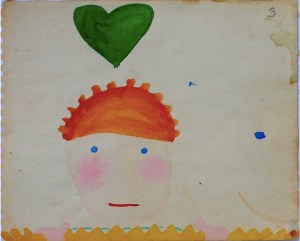
    (page 3 illustration)

    and all the other planets — even tiny, gray Pluto

    He loved watching earthsets best though

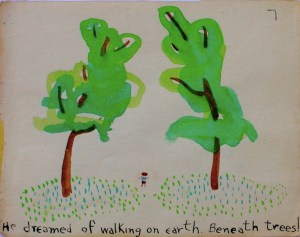
    He dreamed of walking on earth. Beneath trees!

    No trees, no shadows on the sun! In the dream, there were

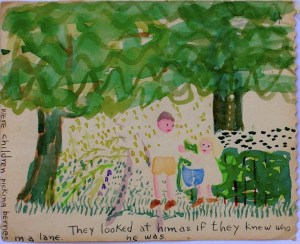
    were children picking berries in a lane. They looked at him as if they knew who he was

    So the boy wanted very much to live on the earth, to pick berries, to meet the children in his dream. He wanted to be a little boy who lived on the earth.
    “Do you,” said the Archangel of the sun when he went to see him. “[I] wonder. It’s a very slow process. You can go to earth but first you must go to Pluto and then to….”

    “No,” stamped the boy. “I wish to go right now.” “Then go,” laughed the Archangel. “[I] think it may do you some good.” And

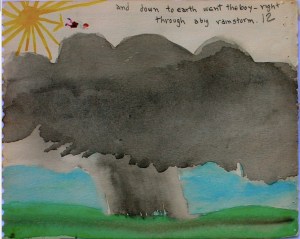
    and down to earth went the boy — right through a big rainstorm.

    It was night & a large moth pursued him all over. Since he was a child of the sun he glowed in the dark

    He hid in a hollow tree at last but did not sleep. He did not need to. He did not know how to.

    A bough of green apples ripened at one glance from him!

    A farmgirl threw a pitcher of milk at him.

    He melted the ice beneath skaters!

    He caused a thistle and a butterfly to come out although it was snowing

    In a minute a little baby he paused to talk to grew up into a woman & then down into a very old lady.

    He could make no contact with earth-people. To them he was often just a sunbeam in the corner of the room.

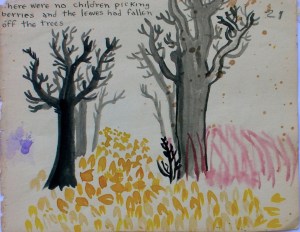
    There were no children picking berries and the leaves had fallen off the trees

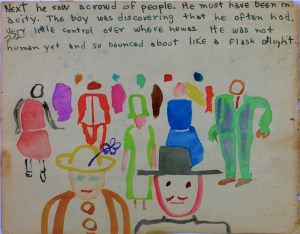
    Next he saw a crowd of people. He must have been in a city. The boy was discovering that he often had very little control over where he was. He was not human yet and so bounced about like a flash of light.

    One day he went back to the sun. It was harder to go to earth than he had thought.

    “As I was saying,” said the Archangel of the Sun. “In order to go to Earth first you must go to Pluto and be…

    an old beggar man for 100 years

    on Uranus harvest the enchanted hay

    (Neptune with his sceptre)

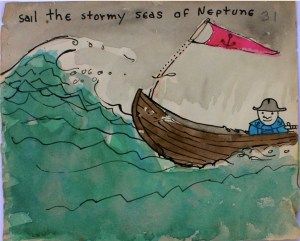
    sail the stormy seas of Neptune

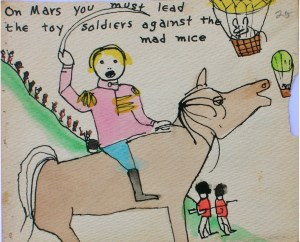
    On Mars you must lead the toy soldiers against the mad mice

    You must be a madcap on the Moon for a full Leap Year

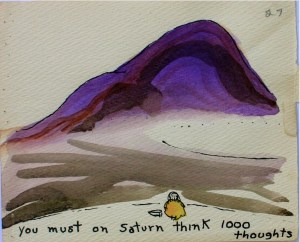
    you must on Saturn think 1000 thoughts

    On Mercury steal the ogress’ magic horn

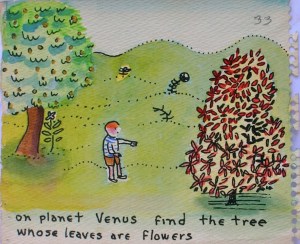
    on planet Venus find the tree whose leaves are flowers

    And now that you have done these things go, for you are ready, Go to earth!

    There he met the children of his dream who said that he was their brother. While berry picking they had lost sight of him in the forest. They were just going home to tell their parents that he was lost,

    but now instead they would take him home.

    Note from Susan Reaney: The Boy Who Lived in the Sun existed from my early childhood and was never published. I always thought of it as unfinished because I could not accept the ending. The boy returns to earth and is reunited with his family, but does he remember being a boy who lived in the sun? Now I think perhaps he does.

    James Reaney at home, age 4. Summer 1930

  • Marvellous Playhouses — Thomas Gerry on James Reaney’s emblem poems

    July 4th, 2019

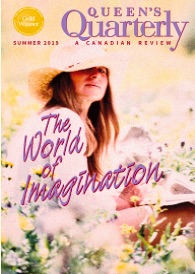
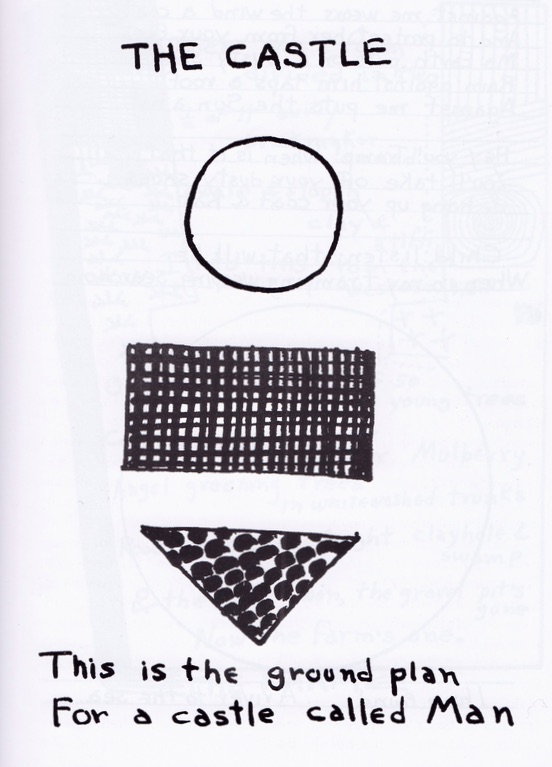
    In the Summer 2019 issue of Queen’s Quarterly, Thomas Gerry’s article “Marvellous Playhouses” celebrates James Reaney’s emblem poems. For Gerry, the poems “put into play” Reaney’s artistic process, a “magnetic method” he developed for generating meaning through the use of wit.

    The emblem poems are theatre-like devices that draw readers into the activity of making meaning. As with audiences for dramatic performances, emblem-readers’ participation is vital. [Queen’s Quarterly, Summer 2019, page 196]

    James Reaney’s emblem poem “The Castle” first appeared in Poetry (Chicago) (1969). See Queen’s Quarterly, Summer 2019, page 197.
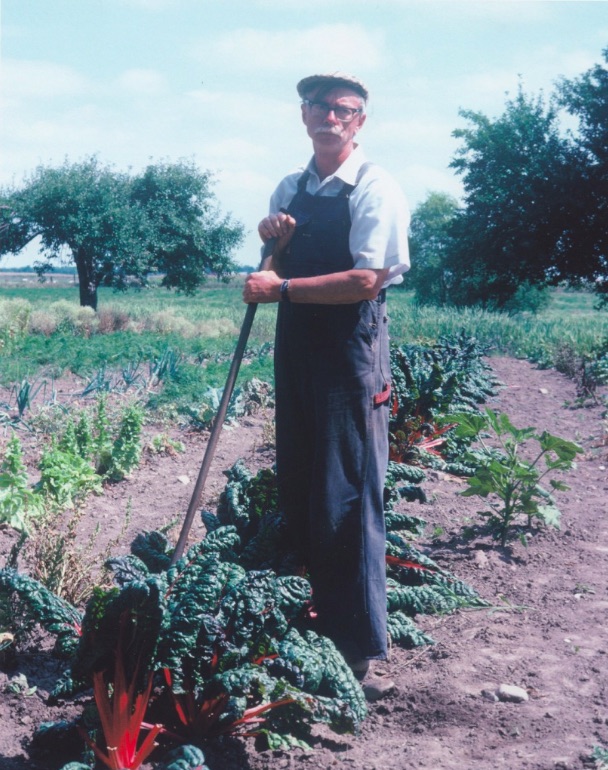
    Summer 1979: James Reaney working in the garden near Stratford, Ontario
    (Photo by Les Kohalmi)

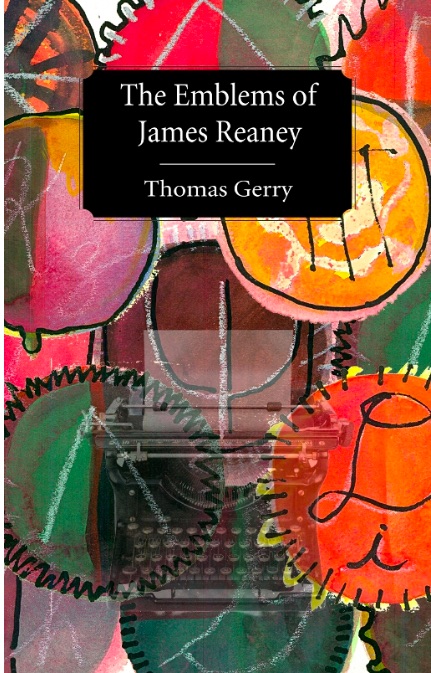
    For a full discussion of all ten emblem poems and James Reaney’s artistic process, see The Emblems of James Reaney, available from The Porcupine’s Quill.

    See also Thomas Gerry‘s 2015 lecture on “Theatrical Features of James Reaney’s Emblem Poems”.

  • Village Opera presents The Great Lakes Suite May 4-5

    April 29th, 2019

    May 4-5 in London, Ontario — In celebration of Canadian composers, the Village Opera directed by Adam Corrigan-Holowitz will present The Great Lakes Suite, which features six poems by James Reaney set to music by John Beckwith.

    Reaney and Beckwith became friends when they were students at the University of Toronto in the late 1940s. The Great Lakes Suite is from The Red Heart (1949), James Reaney’s first poetry collection. Inspired by the poems, John Beckwith created a chamber cycle for two voices accompanied by a trio.

    Along with John Beckwith, this presentation by the Village Opera also includes works by John Greer, London’s Matthew Emery, and two songs by Ontario composer Jeff Enns. The performers are Katy Clark, soprano, and Paul Grambo, baritone.

    When: Saturday May 4 at 7:30 and Sunday May 5 at 3:00
    Where: Elmwood Avenue Presbyterian Church, London, Ontario
    Tickets: $25/$15 for students: https://villageopera.com/buy-tickets

    James Reaney’s poem“Lake Superior” begins the suite:

    Lake Superior

    I am Lake Superior
    Cold and gray.
    I have no superior;
    All other lakes
    Haven’t got what it takes;
    All are inferior.
    I am Lake Superior
    Cold and gray.
    I am so cold
    That because I chill them
    The girls of Fort William
    Can’t swim in me.
    I am so deep
    That when people drown in me
    Their relatives weep
    For they’ll never find them.
    In me swims the fearsome
    Great big sturgeon.
    My shores are made of iron
    Lined with tough, wizened trees.
    No knife of a surgeon
    Is sharper than these
    Waves of mine
    That glitter and shine
    In the light of the Moon, my mother
    In the light of the Sun, my grandmother.

    James Reaney, 1949

    For more about John Beckwith and James Reaney’s musical collaborations, see John Beckwith’s lecture on James Reaney and Music from November 2016: https://jamesreaney.com/gallery/john-beckwith-on-james-reaney-and-music-november-5-2016-at-museum-london/

    For more about composer John Beckwith, see his 2012 autobiography Unheard of: Memoirs of a Canadian Composer, available from Wilfrid Laurier University Press, and also the Canadian Music Centre’s Composer Showcase: http://www.musiccentre.ca/node/37279/showcase

    James Reaney and John Beckwith, Summer 2003, in London, Ontario. Photo by Colleen Reaney
  • The Champlain Society’s The Donnelly Documents: An Ontario Vendetta back in print

    April 2nd, 2019

    As part of its mission to increase public awareness of, and accessibility to, Canada’s rich store of historical records, The Champlain Society has reprinted The Donnelly Documents: An Ontario Vendetta, in a special paperback edition.

    The monograph, edited and introduced by James Reaney, recounts the story of The Biddulph Tragedy of February 4, 1880, where “a body of men, blackened and masked, entered the dwelling of the somewhat notorious Donnelly family and murdered the inmates, the father, the mother, one son, and a girl, a niece”* in Biddulph Township near Lucan, Ontario.

    James Reaney heard about the tragedy as a child: “The effect of my first hearing this story was paralyzing… It was my first glimpse of evil close to home.”**

    ***

    *London Free Press Weekly, 12 February 1880 (See The Donnelly Documents: An Ontario Vendetta, page xv and page 118)

    **From the Introduction to The Donnelly Documents: An Ontario Vendetta, page xxiv.

    See also James Reaney’s entry for James Donnelly (1816-1880) in the Dictionary of Canadian Biography: http://www.biographi.ca/en/bio/donnelly_james_10E.html

    James Donnelly in 1863 courtesy the McCord Museum, Montreal, Quebec: https://www.musee-mccord.qc.ca/en/

  • James Reaney’s Sticks and Stones — Will Donnelly’s fiddle

    January 17th, 2019

    In Act I of James Reaney’s play Sticks and Stones, local boys taunt young Will Donnelly for his crippled foot. In this scene, Mrs Donnelly asks Will for his birthday wish.

    MRS DONNELLY: What day is it today of all days, William Donnelly?
    WILL: It’s my birthday.
    MRS DONNELLY: Tell me one wish.


    WILL: Well, mother, ’tis something other than a prayerbook. I’d like a horse – a black stallion. And a sword. Then I’d ride up and down the line and I’d cut the heads off all those who call me – us – names.


    MRS DONNELLY: Go over to the old tree the storm fell down, Will.
    Will, what would you call this big black horse?
    WILL: Lord Byron. But he wouldn’t be lame, you see.


    MRS DONNELLY: Now see what you find there hidden among the roots. (He searches, crawling into the barrel; searching around it.)


    OTHERS:  (softly and rolling over)
     Then they took me out of that and
     Threw me into a well.
     They left me there for a space of time,
     And me belly began to swell. [1]


    WILL: It’s a parcel. (Actually it is just two sticks.)
    MRS DONNELLY: But it’s not likely your father and I would give you a brown paper parcel for your twelfth birthday. What’s it a parcel of, Will?


    WILL: A fiddle. Is it just for today, mother? Just mine for my birthday? But tomorrow will my brothers get at it?


    MRS DONNELLY: No, Will, it is for you – and only you. To be your music for your entire lifetime. Remember what I’ve told you today.


    (Will mimes the fiddle with two sticks; at edge of stage, a real fiddler follows.)
    WILL: (as he tunes)
    What did happen to father when he wouldn’t kneel and he wouldn’t swear?


    MRS DONNELLY: Nothing’s happened.
    WILL: Nothing’s happened yet?
    MRS DONNELLY: Nor ever will….

    The vendetta against the Donnellys and their eventual murder

    Mrs Donnelly’s hope that their troubles from the old country are behind them proves unfounded, and the vendetta against them continues unabated until their murder some twenty years later (4 February 1880). During that time, Will Donnelly grows up to play his fiddle at weddings and dances and have a black stallion called Lord Byron (see James Reaney’s The Donnellys Part II – The St. Nicholas Hotel). 

    On 2 September 1879, five months before the murder of five members of his family, Will Donnelly frightens away a mob come to terrorize him by playing a tune on his fiddle. In writing the play, James Reaney was particularly impressed by this:

    “When on 2 September 1879, the mob who had just terrorized his parents at their farm arrived at his house in Whalen’s Corners, William frightened them away with a fiddle tune! None of the commentators ever make enough of this. Nor of the mother risking her life to warn her son that a mob was about to confront him. From now on, I have nothing but  admiration and sympathy for the Donnelly family, and a feeling that their bravery also betrayed them. But, of course, what they couldn’t possibly have known was that the whole affair of the cow and resultant trial was a dry run for another visit to the Donnelly house at night.…”(See James Reaney’s The Donnellys: An Ontario Vendetta, Introduction, page xcix, The Champlain Society, 2004.)

    [1] These lines sung by the Others are from the Barley Corn Ballad, an old Irish folk tune that James Reaney uses to underscore the Donnellys’ fate. As James Noonan writes in the Afterword to the published version of the play, “The ballad is so fitting to illustrate the fate of the Donnellys that if you substitute ‘Donnelly’ for ‘barley grain’ you have the story of the Donnellys told in ballad form.” (Afterword, page 350)

    James Reaney’s three plays about the Donnellys — Sticks and Stones, The St. Nicholas Hotel, and Handcuffs — are available in one volume from Dundurn Press.

    Sticks and Stones Act I
    Mr Donnelly: And this earth in my hand, the earth of my farm
    That I fought for and was smashed and burnt for
    (Jerry Franken as Mr Donnelly, Tarragon Theatre, 1973)
←Previous Page
1 … 4 5 6 7 8 … 19
Next Page→
  • New second edition of Colleen Thibaudeau’s Lozenges originally published by James Reaney’s Alphabet Press

    In late summer 1965, James Reaney’s Alphabet Press printed the first edition of Colleen Thibaudeau’s Lozenges: Poems in the Shapes of Things in London, Ontario. Thibaudeau’s husband James Reaney typeset the poems and also designed the cover. In fall 2024, Hilary Neary, historian and former Alphabet Magazine designer, proposed a facsimile second edition of the…

  • Peggy Roffey presents Colleen Thibaudeau’s Big Sea Vision

    Thank you for coming to the 16th annual James Reaney Memorial Lecture celebrating poet Colleen Thibaudeau’s ‘Big Sea’ Vision this past Saturday November 29th. This year’s lecture is part of Colleening 2025, a year-long celebration of Colleen Thibaudeau’s centenary. Thank you, Peggy Roffey, for leading us through a thoughtful exploration of Thibaudeau’s poetry. After getting us to…

  • The 2025 James Reaney Memorial Lecture on November 29

    This year, in the spirit of metaphor, the 2025 James Reaney Memorial Lecture steps to the side and shows the “she” beside the “he”: James Reaney’s wife, poet Colleen Thibaudeau (1925-2012). Join us on Saturday November 29th at the London Public Library Central Branch for poet Peggy Roffey’s presentation “Colleen Thibaudeau’s Big Sea Vision”. In a combination…

Blog at WordPress.com.


Loading Comments...
 

    • Subscribe Subscribed
      • James Reaney
      • Already have a WordPress.com account? Log in now.
      • James Reaney
      • Subscribe Subscribed
      • Sign up
      • Log in
      • Report this content
      • View site in Reader
      • Manage subscriptions
      • Collapse this bar