In this excerpt from James Reaney’s play Gyroscope, Gregory La Selva, lab technician, seeks to restore his self-esteem and win back the love of his wife, Hilda, a famous poet. To win Hilda’s respect, he must prove to her that he too can write poetry. He enlists the help of Mattie Medal, PhD student, to help him write a poem that will win him a place at the Harpers’ Poetry Guild alongside Hilda.
Scene Six: The Husband Takes a Chance on Being Skinned by Apollo*
PUZZLE gets down from the chair. We focus on MATTIE, with wagon, who is talking to GREG.
GREG: Look, is there some sort of crash course in writing poetry? I’d like to crack that bunch of Harp Guild Workshop Poetry ladies wide open. MATTIE: You’re a man; the contest is open to women only. GREG: I’m desperate enough for a sex-change operation. MATTIE: You’re just jealous of your wife. GREG: I’m even more ashamed of my sterility. I have no dreams. She is virile. I am not. HILDA: Gregory La Selva couldn’t write a poem if he tried. He should stick to being a poem. GREG: She’ll be sorry she said that. I’m going to do as you say and start remembering things from childhood, keep a diary, get a pen and an ink bottle. MATTIE: A typewriter is okay. GREG: I’m so dull, why hasn’t she left me ages ago? How do I get more introverted? Is there anything I could take? NICHOLAS: Did you look at my scrapbook of intoxicating mushrooms? GREG: Nicholas, it’s no use — showing me pictures of mushrooms. I want to see the mushrooms in person before I start collecting. NICHOLAS: Opium. GREG: Opium. MATTIE: Awfully good at first — friend did a thesis on it about it. Your mind starts out being a palace; then… the palace turns into a boarding house, then a flophouse for tramps, then the tenements of criminals whose windows are striped with bars. The palace has turned into a prison. GREG: I don’t care. Show me the palace, Nicholas, get me a dress. NICHOLAS: What’s your size? GREG: In a dress? (gives NICHOLAS a slip of paper) MATTIE: For a start, Mr. La Selva, underline the words you really like in this forty-thousand-word dictionary. Nicholas, go to Agnes Dactyl’s place and see what she has in second-hand dresses. Let’s see these measurements. Very well.
She gives them to NICHOLAS, who slowly proceeds to AGNES’s store.
Oh boy, this is a new part of my thesis – the birth of a poet…
∞♥∞♥∞
*Note: “Being skinned by Apollo” is a reference to the fate of Marsyas, the satyr who challenges Apollo to a musical contest with the Muses as judges. In 1963 James Reaney wrote an adaptation of Euripides’ play The Bacchae (405 BCE), which was never produced. In Gyroscope, Gregory La Selva disguises himself as a woman to enter Hilda’s poetry contest, just as Pentheus goes dressed as a woman to spy on the Bacchae’s Dionysian rites. Gregory wins the poetry contest and avoids the gruesome fate of Pentheus at the hands of the Bacchae.
Gyroscope was produced in a workshop at Western University in early 1980, and performed in a rehearsed reading at Blue Mountain Poetry Festival that summer. Keith Turnbull later directed the play at Tarragon Theatre in Toronto, May 14 to June 21, 1981. The cast members were Jerry Franken, Janis Nickleson, Rita Jiminez, Brian Dooley, and Nancy Palk.
James Reaney (holding mug of tea) with members of the Tarragon Theatre production of Gyroscope: Keith Turnbull, Dorothy Chamberlin, Nancy Palk, Suzanne Turnbull, and Janis Nickleson, May 1981. Photo courtesy Les Kohalmi.
Gyroscope is available in Reaney Days in the West Room: Plays of James Reaney (2009), edited by David Ferry and published by Playwrights Canada Press.
The local poet is riding his bike uptown On a fairly hot summer day Bent on Jumbo’s Ice Cream booth Before mailing a poem to Chimaera at the Post Office At Jumbo’s Ice Cream booth there are Thirty flavours available including— Licorice, fudge, lemon, orange, apple, grape, Banana, chocolate, cherry, Maple Walnut (my favourite) Vanilla, of course, peppermint, strawberry, raspberry— Weren’t there some vegetable ones? Do I remember— Onion ice cream? And this pair of double dip skim milk flavours Cost only a nickel each! And the ceiling was of pressed tin! So, I plunk down a nickel for a Maple Walnut! And so out the door bent on making the cone Last till I reach the Post Office door— The Post Office is French Provincial with 4 clocks. The poet holds his bicycle up with his left hand. Walks slowly licking as he proceeds. Two little girls say scornfully: “He’s acting Just like a little kid!” But he thinks— “Isn’t this what life is all about?”
James Reaney, 2005
September 1975: James Reaney at the Nihilist Picnic, Poplar Hill, Ontario.
“Ice Cream” is from Souwesto Home (2005) and available from Brick Books.
We were saddened to learn of writer, editor, and literary critic Stan Dragland’s passing earlier this month. Stan Dragland was a colleague of James Reaney’s at Western University (1970-1989) and a mentor and champion to writers and poets across Canada.
James Reaney on the Grid, an expanded version of Stan Dragland’s 2019 James Reaney Memorial Lecture, will be available later this fall from The Porcupine’s Quill.
From the Introductory section: This started out as the tenth annual James Reaney Memorial Lecture. It was delivered in London, Ontario, on November 2, 2019. That version turns out to have only scratched the surface of what I’ve been finding to say about Reaney’s literary career. As the talk grew into what it is now, it became ever clearer to me that Reaney’s legacy includes one unmistakable masterpiece, the Donnelly trilogy, a play in three parts so magnificent that it stands, or ought to stand, with the work of literary greats anywhere. But there are many other works of real importance, plus a few that may perhaps be worth reading only to someone like me, interested in all of Reaney, because of what all of it has to say about the best of his work […]
James Reaney’s translation of Pierre Falcon’s “The Battle of Seven Oaks” (“La Chanson de la Grenouillère”) can be found in Margaret Arnett MacLeod’s 1960 book Songs of Old Manitoba.
Pierre Falcon (1793-1876) was a celebrated Métis balladeer and North West Company clerk. “He had a feeling for words, a sense of rhythm, and a love of a rollicking tune. He was strongly dramatic, and his idea of the importance of the Métis Nation may have been more right than his English contemporaries were ready to concede [.…]” (MacLeod, p. 2)
Pierre Falcon’s 1816 ballad commemorating the Métis victory at the Battle of Seven Oaks (Songs of Old Manitoba, p.5)
James Reaney offers these notes on his approach to translating the song:“This translation can be sung to Pierre Falcon’s original tune with some stretching, but no more than to sing his own words requires. In making this translation I have followed Ezra Pound’s practice. Since there can be no translation so inaccurate as that which sticks closely and literally to the surface of a song, I have attempted to make only an English equivalent of Falcon’s ballad and so translate the really important thing – its high spirits.” (MacLeod, p. 9)
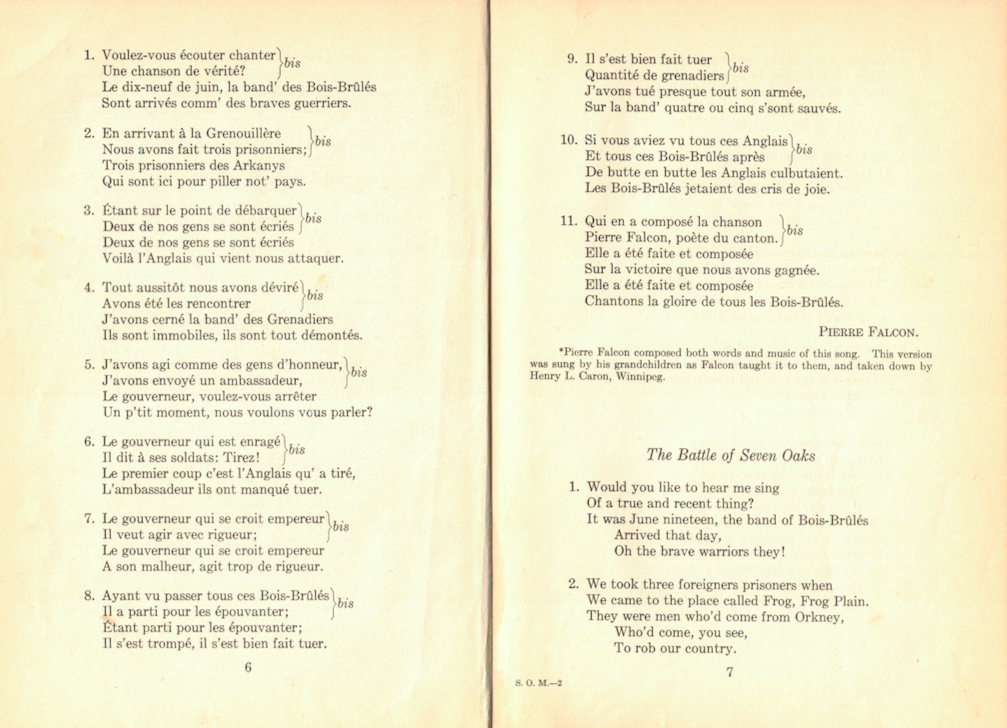
1. Would you like to hear me sing Of a true and recent thing? It was June 19, the band of Bois-Brûlés Arrived that day, Oh the brave warriors they!
2. We took three foreigners prisoners when We came to the place called Frog, Frog Plain. There were men who’d come from Orkney, Who’d come, you see, To rob our country.
3. Well we were just about to unhorse When we heard two of us give, give voice. Two of our men cried, “Hey! Look back, look back! The Anglo-Sack Coming for to attack.”
4. Right away smartly we veered about Galloping at them with a shout! You know we did trap all, all those Grenadiers! They could not move Those horseless cavaliers.
5. Now we like honourable men did act, Sent an ambassador – yes, in fact! “Monsieur Governor! Would you like to stay? A moment spare — There’s something we’d like to say.”
6. Governor, Governor, full of ire. “Soldiers!” he cries, “Fire! Fire.” So they fire first and their muskets roar! They almost kill Our ambassador!
7. Governor thought himself a king. He wished an iron rod to swing. Like a lofty lord he tries to act. Bad luck, old chap! A bit too hard you whacked!
8. When we went galloping, galloping by Governor thought that he would try For to chase and frighten us Bois-Brûlés. Catastrophe! Dead on the ground he lay.
9. Dead on the ground lots of grenadiers too. Plenty of grenadiers, a whole slew. We’ve almost stamped out his whole army. Of so many Five or four left there be.
10. You should have seen those Englishmen — Bois-Brûlés chasing them, chasing them, From bluff to bluff they stumbled that day While the Bois-Brûlés Shouted “Hurray!”
11. Tell, oh tell me who made up this song? Why it’s our own poet, Pierre Falcon. Yes, she was written this song of praise For the victory We won this day. Yes, she was written, this song of praise — Come sing the glory Of the Bois-Brûlés.
( ( (0) ) ) Rufin Turcottesings the original French version on this 1963 Smithsonian Folkways Recording “Folksongs of Saskatchewan”: https://www.youtube.com/watch?v=yB1knUIOSH0
From Songs of Old Manitoba, Pierre Falcon’s original French lyrics (p. 6-7)
Note: James Reaney’s long poem “A Message to Winnipeg” (1960) includes this translation of Pierre Falcon’s 1816 song. For more about the June 19, 1816 Battle of Seven Oaks, see the entry in The Canadian Encyclopedia.
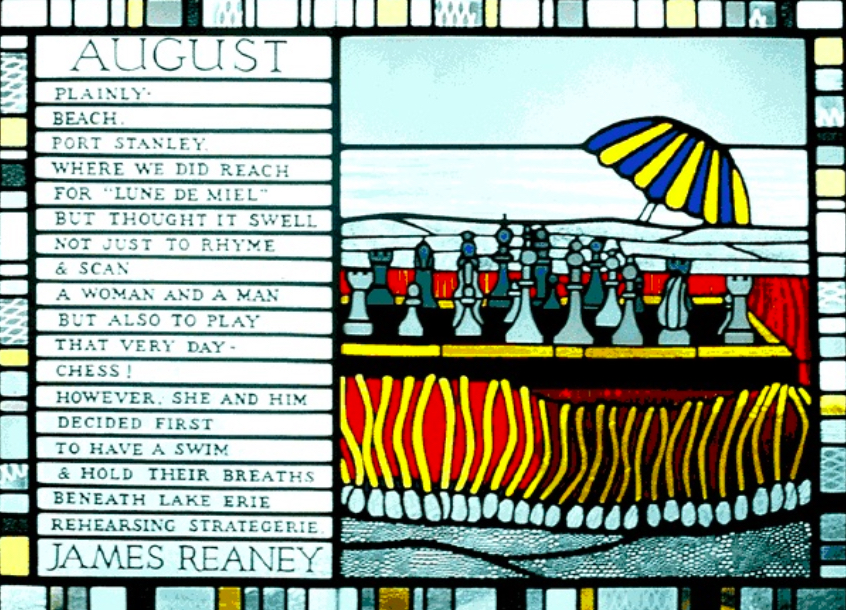
“August” by James Reaney rendered in stained-glass by artist Ted Goodden (2000).
James Reaney‘s poem celebrating the month of August is illuminated by stained-glass artist Ted Goodden for the 2000 calendar series “Perpetual Illuminations“.
I love gateways into farms & yards: even more Do I love door- ways (latches, their hooks, hinges, keyholes). From my collegiate days I remember the janitor, Mr January, Who lingered, with his blizzard broom At the highschool’s entrance, tending His garden of galoshes, rubbers, boots, Mudmats, sleet mops, rainwhisks. Awesomely quiet, brooding, puttering man, He had, in his pockets, keys for all locks Of classroom, gymnasium, Even the mysterious cubby holes under stairs, And the exits & entrances of the assembly Auditorium. You shuffler & sweeper, who opened, who shut, Kept the rain, wind, mud, snow, out, And us, inside, warm & dry. Doorkeeper, in some strange way, You caretaker, though you were Neither principal nor teacher, You secretly governed the school. We often dreamt of you, Our most remembered educator.
Congratulations to Kydra Ryan and AdamCorrigan Holowitz of Alvego Root Theatre for your encore performances of James Reaney’s short stories “The Box Social” and “The Bully” and for the first performance of Colleen Thibaudeau’s short story “Wild Turkeys” — thank you so much for bringing these early works by Reaney and Thibaudeau to life.
Our grateful thanks to Carolyn Doyle, our wonderful host, and Joshua Lambier and Gregory De Souza at Wordsfest for helping us put this special presentation of stories by two great writers together.
The James Reaney Memorial Lecture series celebrates the life and work of Southwestern Ontario poet and dramatist James Reaney, who was born on a farm near Stratford, Ontario and found a creative home in London, Ontario.
We are honoured to dedicate the 2021 Memorial Lecture to the late Catherine Sheldrick Ross (1947-2021), a former Western University student and colleague of James Reaney’s.
Our thanks to Wordsfest and the London Public Library for their support of the lecture series, and to Poetry Stratford and the Stratford Public Library for their support in hosting the earlier lectures (2010-2015).
James Reaney 1972Near Stratford, Ontario, October 2015
Sunday November 6 at 2:00 pm EDT — Join us at Wordsfest for this year’s James Reaney Memorial Lecture and celebrate the short stories of Southwestern Ontario writers James Reaney and Colleen Thibaudeau.
Kydra Ryan and Adam Corrigan Holowitz of London’s AlvegoRoot Theatre will perform two of James Reaney’s short stories, “The Box Social” and “The Bully”, as well as Colleen Thibaudeau’s story“Wild Turkeys”.
Host Carolyn Doyle will lead a discussion of these three stories written when James Reaney and Colleen Thibaudeau were in their early twenties.
More about James Reaney and Colleen Thibaudeau’s short stories
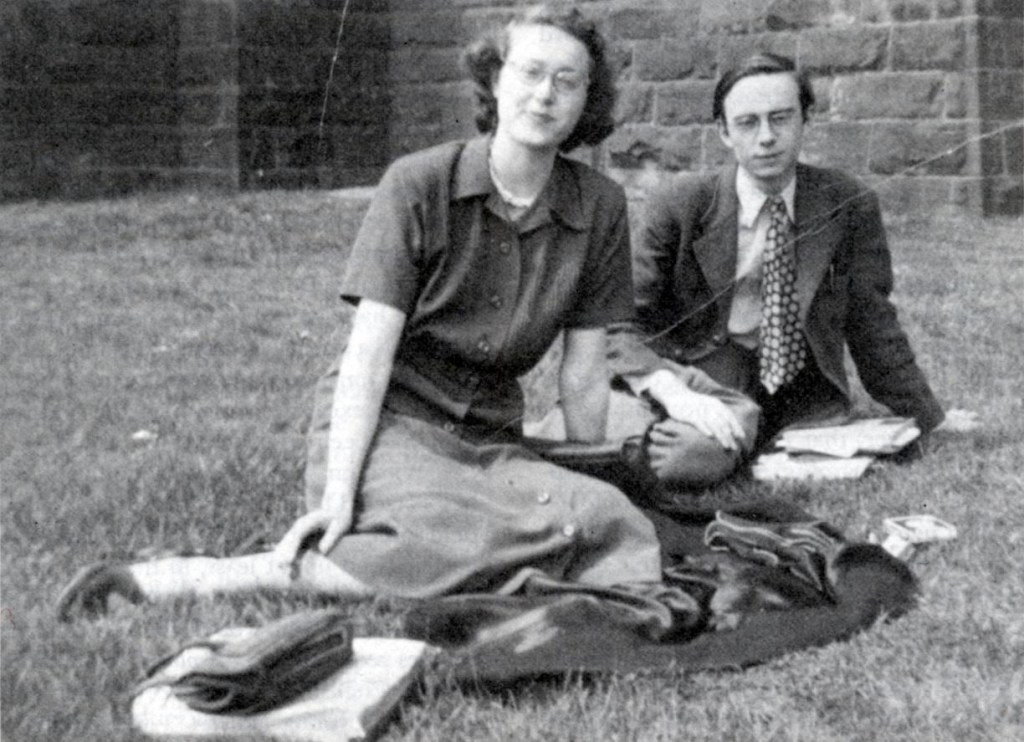
James Reaney and Colleen Thibaudeau met in 1945 at the University of Toronto and they both had poems and short stories published in The Undergrad, the University College magazine. Both had common background in coming from outside Toronto to attend university and having grown up in smaller communities. James Reaney grew up on a farm near Stratford, Ontario, and Colleen Thibaudeau grew up in St. Thomas, Ontario and also in Markdale, Ontario, where her father’s family had a farm.
Colleen Thibaudeau’s story “Wild Turkeys” was published in The Undergrad (II, 1946-47, pages 22-27). James Reaney’s story “The Box Social” also appeared in this issue (pages 30-31).
New to big-city life themselves, it is not surprising that their early writing features characters who struggle to move beyond the limits of rural society. Like the people they write about, they found solace and inspiration in the world they knew best.
All three stories (“Wild Turkeys” (1947), The Box Social” (1947), and “The Bully” (1950)) deal with family life in rural communities and the challenges social isolation brings to advancing one’s social and economic position.
In Thibaudeau’s “Wild Turkeys”, Aunt Belle has the love and support of her family to guide her through her youthful romance in 1880s Grey County. Many years later she sees her niece trying to stay immersed in her university studies, and she shares the story of her heartbreak to help her niece gain a new perspective and a new resolve to put her own budding romance second.
Such open communication is not possible for the heroine of Reaney’s “The Box Social”, and she must go alone to the social event at the school to confront her former lover and make his betrayal public. The family in “The Bully” approves of the hero’s wish to be a teacher, but expects him to solve all the difficulties he faces as a shy newcomer in the unfamiliar environment of the high school.
“The Bully” and “The Box Social” have been called “the first examples of a modern tradition called Southern Ontario Gothic” because of “their use of Gothic elements of the macabre.”[1] “What makes this locale so prone to Gothic tales is the failure of communication between family members or social groups. In the absence of communication, strange projections and psychological grotesqueries spring up and rapidly grow to unmanageable proportions.”[2]
For poet Jay Macpherson, Reaney’s “The Bully” “turns on the contrast between crushing reality and the liberating dream.”[3] It is the hero’s ability to dream his way out of his prison that saves him from being destroyed by having to withdraw from the school. The heroine of “The Box Social” also finds redemption by confronting her oppressor and realizing she can get past her hatred for him.
In Thibaudeau’s story “Wild Turkeys”, the passage of time helps Aunt Belle overcome her sadness about her schoolteacher suitor moving on. “After all I had been raised barefoot in a log house, but there was no need to make things harder for us all. I learned the millinery and then your uncle Peter Martin came along. He had a new barn and three hundred acres…” (WT 26) She looks back on her life on the farm as idyllic despite all the chores and racing after the errant turkey hen: “In the old days it seemed as if all the mornings were like the first morning of the world, and I could have run forever through the tall grass. Run and not wearied….” (WT 25).
In a later story “The City Underground” (1949), Thibaudeau does have a theme of a child’s imaginary world helping him realize the need to fight against bullies in the real world, but it does not have the uncanniness and distortions that Reaney’s characters experience. [4]
Notes and references
[1] The Concise Oxford Companion to Canadian Literature, page 511. William Toye, Ed., Oxford University Press, 2011. [2] Michael Hurley and Allan Hepburn in The Concise Oxford Companion to Canadian Literature, pages 593-594. William Toye, Ed., Oxford University Press, 2011. (For more about Southern Ontario Gothic and James Reaney’s neo-gothic stories, see the September 3, 2021 post on Tales for a Reaney Day.) [3] Jay Macpherson, The Spirit of Solitude: Conventions and Continuities in Late Romance, Yale University Press, 1982, pages 262-263. (See also James Reaney’s article on Macpherson’s poetry: “The Third Eye: Jay Macpherson’s The Boatman” in Canadian Literature, No. 3 (1960), pages 23-34.) [4] Colleen Thibaudeau, “The City Underground”, Canadian Short Stories, Robert Weaver and Helen James, Eds., 1952, Oxford University Press, Toronto. (“The City Underground” was also broadcast in 1950 on the CBC radio programme Canadian Short Stories.)
“The Box Social” was originally published in 1947 in The Undergrad at the University of Toronto, and then in the popular magazine The New Liberty. Here’s what James Reaney had to say about why he wrote the story in his autobiography from 1992:
“Out of the deep past it somehow came to me, I think from my mother talking about the way men treated women in our neighbourhood. They never struck back; well, in my story one of them did.” (James Crerar Reaney, Contemporary Authors Autobiography Series, Volume 15, page 304.)
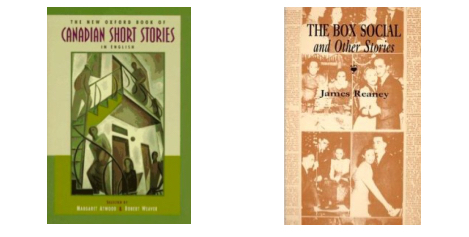
“The Bully” was broadcast in 1950 on CBC Radio and later published in Canadian Short Stories (1952) edited by Robert Weaver. While at university in the late 1950s, Margaret Atwood remembers discovering “The Bully” in Weaver’s anthology. “It made a big impression on me — it seemed a way of writing about Canadian reality that did not confine itself to the strict social realism that was mostly the fashion then. [Excerpted from Margaret Atwood, “Remembering James Reaney”, Brick Issue 82 (Winter 2009), page 160.]
“The Bully”is included in The New Oxford Book of Canadian Short Storiesin English, Oxford University Press, Toronto, 1996. It is also collected in James Reaney’s The Box Social and Other Stories (1996), published by Porcupine’s Quill.
The James Reaney Memorial Lecture series celebrates the life and work of Southwestern Ontario poet and dramatist James Reaney, who was born on a farm near Stratford, Ontario and found a creative home in London, Ontario.
We are honoured to dedicate the 2021 Memorial Lecture to the late Catherine Sheldrick Ross (1947-2021), a former Western University student and colleague of James Reaney’s.
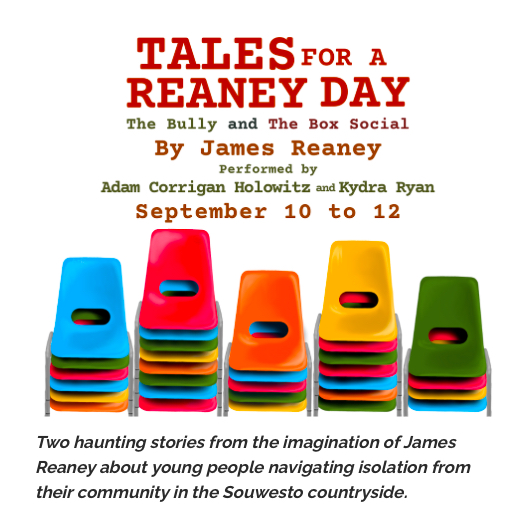
On September 10, 11, and 12th, Alvego Root Theatre will present Tales for a Reaney Day – a double bill featuring two of James Reaney’s short stories, “The Bully” and “The Box Social”. Adam Corrigan Holowitz and Kydra Ryan are the co-directors and performers.
More about James Reaney’s “neo-Gothic” short stories
“While an undergraduate at the University of Toronto [BA 1948, MA 1949], James Reaney published two stories, “The Bully” and “The Box Social,” that are not only classic Canadian short stories but are the first examples of a modern tradition called Southern Ontario Gothic (having its origin in the novels of John Richardson and some of the stories Susanna Moodie tells) that make use of Gothic elements of the macabre. In the four-page “The Box Social,” for example, a young man bids for a prettily wrapped shoe box, from a girl he made pregnant, that contains “the crabbed corpse of a stillborn child wreathed in bloody newspaper.” Margaret Atwood has remarked that “without ‘The Bully,’ my fiction would have followed other paths.” (The Concise Oxford Companion to Canadian Literature, William Toye, Ed., Oxford University Press, 2011, page 511.)
“The Box Social” was originally published in 1947 in The Undergrad at the University of Toronto, and then in the popular magazine The New Liberty. Here’s what Reaney had to say about why he wrote the story in his autobiography from 1992:
“Out of the deep past it somehow came to me, I think from my mother talking about the way men treated women in our neighbourhood. They never struck back; well, in my story one of them did.” (James Crerar Reaney, Contemporary Authors Autobiography Series, Volume 15, page 304.)
“The Bully” was broadcast in 1950 on CBC Radio and later published in Canadian Short Stories (1952) edited by Robert Weaver. While at university in the late 1950s, Margaret Atwood remembers discovering “The Bully” in Weaver’s anthology. “It made a big impression on me — it seemed a way of writing about Canadian reality that did not confine itself to the strict social realism that was mostly the fashion then.” (Excerpted from Margaret Atwood, “Remembering James Reaney”, Brick Issue 82 (Winter 2009), page 160.)
May 30, 1996 in London, Ontario — James Reaney with Margaret Atwood, “An Evening with James Reaney & Friends” (Photo courtesy London Free Press)
James Reaney and Southern Ontario Gothic
“James Reaney’s plays — Colours in the Dark (1969), Baldoon (1976), and The Donnellys (1974-7) — as well as his short stories “The Bully” and “The Box Social” (reprinted in The Box Social and Other Stories in 1996), also assume Gothic elements of the macabre rooted in nightmarish families and uncanny action. […]
What makes this locale so prone to Gothic tales is the failure of communication between family members or social groups. In the absence of communication, strange projections and psychological grotesqueries spring up and rapidly grow to unmanageable proportions. Malevolent fantasies are the source and sustenance of the Gothic tradition.” (Michael Hurley and Allan Hepburn in The Concise Oxford Companion to Canadian Literature, William Toye, Ed., Oxford University Press, 2011, pages 593-594.)
What do you mean by Gothic?
“…It’s the spirit of solitude, the isolated person rattling around, usually in an old dark castle in the early Gothic novels, but then in Faulkner in an old plantation house. In Ontario we can’t afford plantation houses so we have a farmhouse or an apartment building that has a lot of empty rooms in it, as in The Edible Woman…. It’s filled with the nightmare of life, but it’s this isolation that is at the bottom of it, I think, because of science. The whole Gothic tradition is already in Hamlet.” (Interview with James Reaney from July 23, 1991 from In the Writers’ Words: Conversations with Eight Canadian Poets, Laurence Hutchman, Guernica Editions, 2011, pages 173-174.)
More on the tradition of Gothic fiction
“Gothic fictionis a genre obsessively focused on the house. ‘Last night I dreamt I went to Manderley again’ is the famous first sentence of Daphne du Maurier’s Rebecca (1938). In some other kinds of stories, the house is a place of safety, a sanctuary from the world. But not in gothic fiction, where interior spaces become prisons for imperiled heroines or represent a domestic happiness from which the scarred male protagonist is excluded. Naturally the house in question is not just any house but sometimes a monastery, convent, prison, or insane asylum. In the female-centered gothic, the male owner of the castle is an older man with a piercing glance – aristocratic, obsessed, moody, and secretive, with qualities that mark him as a literary descendant of Satan in Paradise Lost….”(Catherine Sheldrick Ross, The Pleasures of Reading: A Booklover’s Alphabet, Libraries Unlimited, 2014, page 65.)
The opening paragraph fromJames Reaney’s 1950 short story“The Bully”
As a child I lived on a farm not far from a small town called Partridge. In the countryside about Partridge, thin roads of gravel and dust slide in and out among the hollows and hills. As roads go, they certainly aren’t very brave, for quite often they go round a hill instead of up it and even in the flattest places they will jog and hesitate absurdly. But then this latter tendency often comes from some blunder a surveying engineer made a hundred years ago. And although his mind has long ago dissolved, its forgetfulness still pushes the country people crooked where they might have gone straight….
Come to Alvego Root Theatre’s Tales for a Reaney Day and hear two of James Reaney’s short stories — Adam Corrigan Holowitz performs “The Bully” and Kydra Ryan performs “The Box Social”. Where & When: September 10-12 at Somerville 630, 630 Dundas Street, London, Ontario.
To celebrate National Poetry Month, here is the “April” eclogue from James Reaney’s long poem A Suit of Nettles. April ARGUMENT: With Duncan as judge the geese hold a bardic contest in honour of Spring. [DUNCAN RAYMOND VALANCY] Here is a kernel of the hardest winter wheat Found in the yard delicious for to eat.…
The Farm ( ( ( 0 ) ) ) For more about James Reaney’s poems and a look back at the family farm where James Reaney grew up, see the 1971 TVOntario documentary “James Reaney” in the Canadian Writers series. The Farm There was a farm divided in two1/2 of it surly brick maker ownedswale…
2026 — James Reaney’s centenary year — is off to a good start with two plays based on his work from London’s AlvegoRoot Theatre. On February 20-21, AlvegoRoot presents two encore performances of Sleigh Without Bells: A Donnellys Story — a short story by James Reaney from The Box Social and Other Stories (1996). Adam Corrigan Holowitz reprises his solo…









 James Reaney