Devil’s Artisan, founded in 1980 to present to Canadian readers “information on the craft of printing and bookmaking, on bibliographic and historic matters, and on communicative, sociological, and technical subjects related to printing,” has added James Reaney to its Rogue’s Gallery of the Canadian Book and Printing Arts this month.
“In the spirit of Gutenberg, printing copies of the Bible for lay people to read, and of William Blake, infernally printing his own illustrated poems, Reaney hand-set Alphabet and printed it with a motorized Chandler & Price vertical platen press.”
We know James Reaney would appreciate this honour, and his deepest wish was that others would be inspired to write and publish their stories.
“Two years later (printing lessons, typesetting, waiting for t’s to come from Toronto, balancing trays of type on buses rolling in blizzards) here it is.” — James Reaney, July 1960, from the Editorial to Alphabet, Issue No. 1.
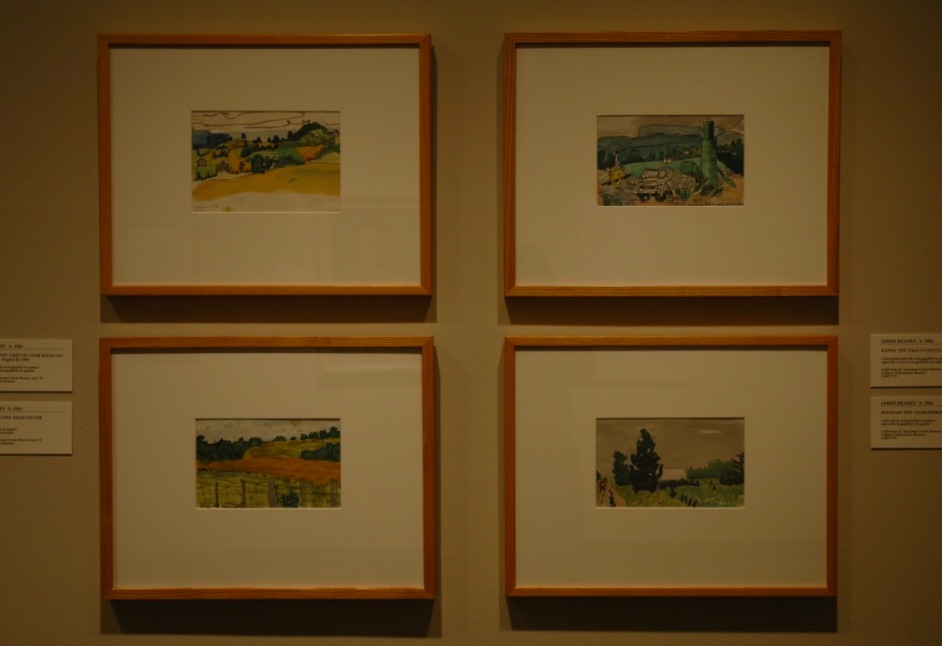
Four rural landscape paintings by James Reaney are part of the Pastorale exhibition at Museum London from July 16 to October 9, 2011. The paintings feature views of the Canadian farm and are chosen from the Museum’s permanent collection.
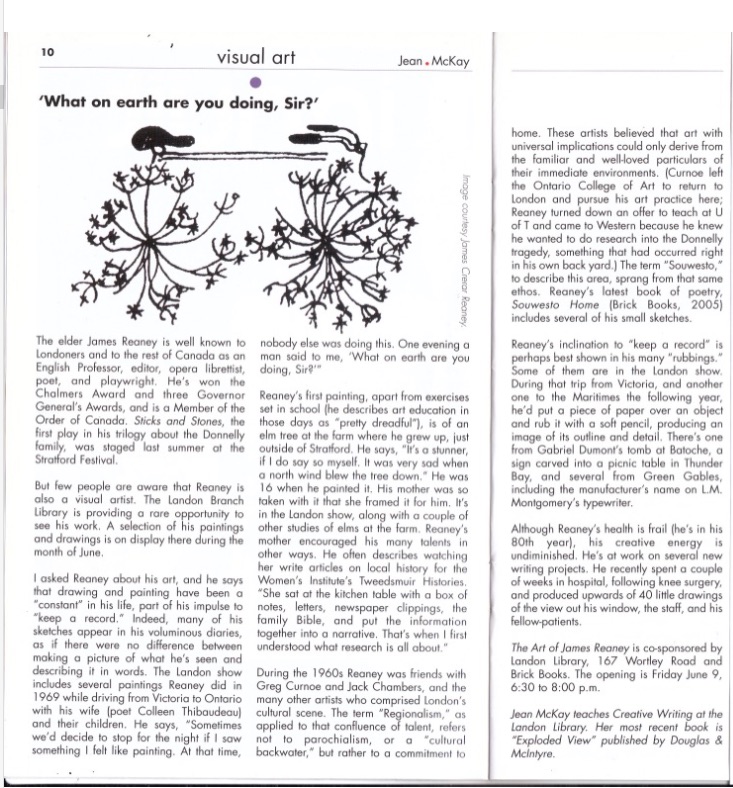
Drawing and painting were a “constant” in James Reaney’s life, and these landscape paintings grew out of a desire to “keep a record” of the world he knew (see Jean McKay’s article,“What on earth are you doing, Sir?” ArtScape, Issue 5, June 2006, 10). Here is a painting James Reaney made in Oxford County in 1978.
Watercolour by James Reaney, East Zorra, Oxford County, Near Cassel Mennonite Church, September 2, 1978
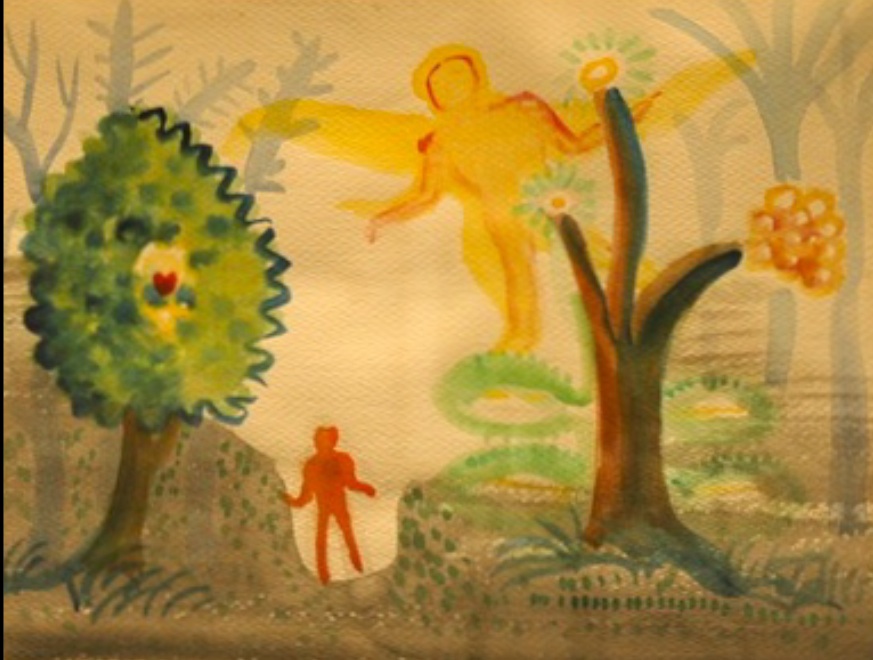
James Reaney’s watercolour painting “David Willson Meets an Angel in the Forest”, 1962 (Photo courtesy Linda Morita, McMichael Canadian Art Collection)
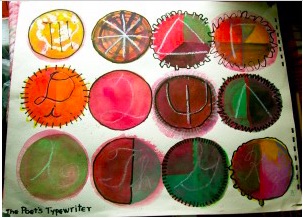
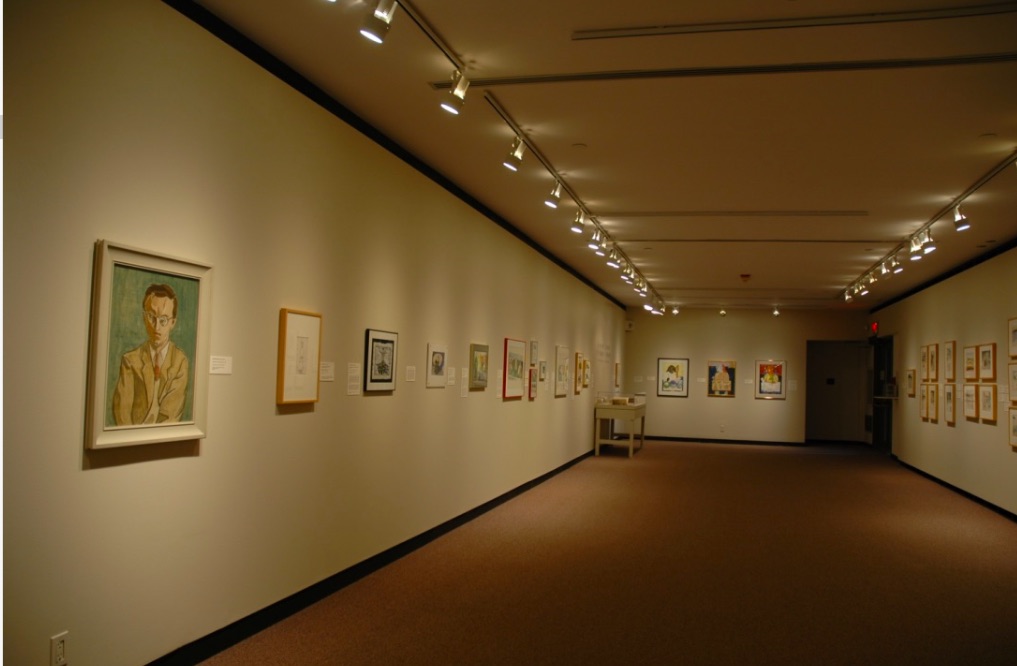
Seen in the context of Reaney’s writing, this exhibition probes ideas of play, home, regionalism, symbolism, and the interplay between text and image. Through sketches, drawings, and paintings of emblems, figures and archetypes, as well as the Canadian landscape, the exhibition explores the themes most prevalent in his writings. (From the Spring Exhibitions invitation, McMichael Canadian Art Collection, April 17, 2008)
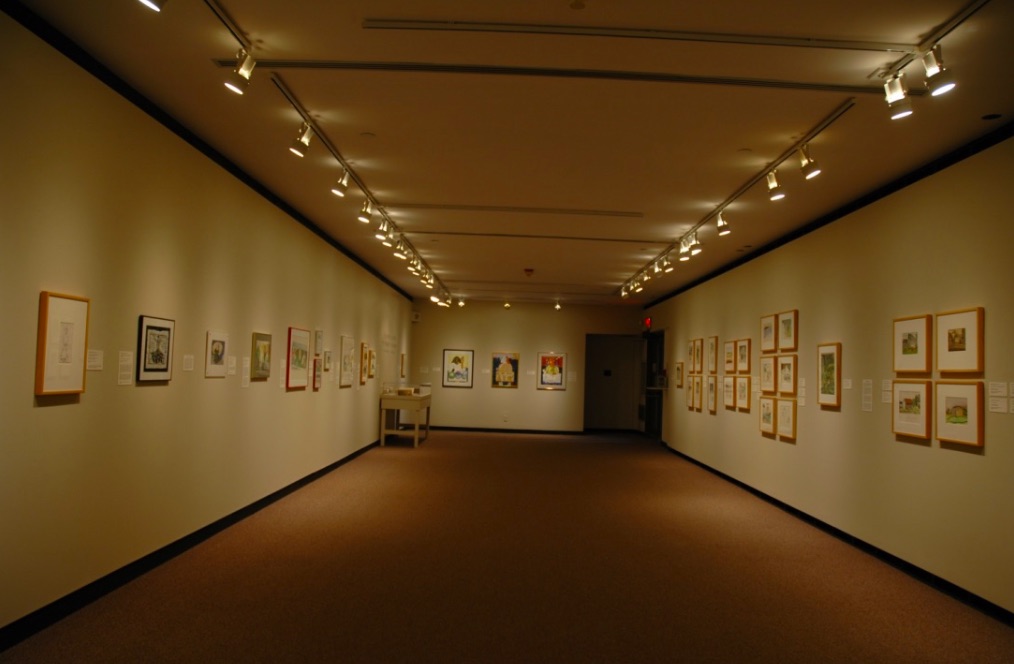
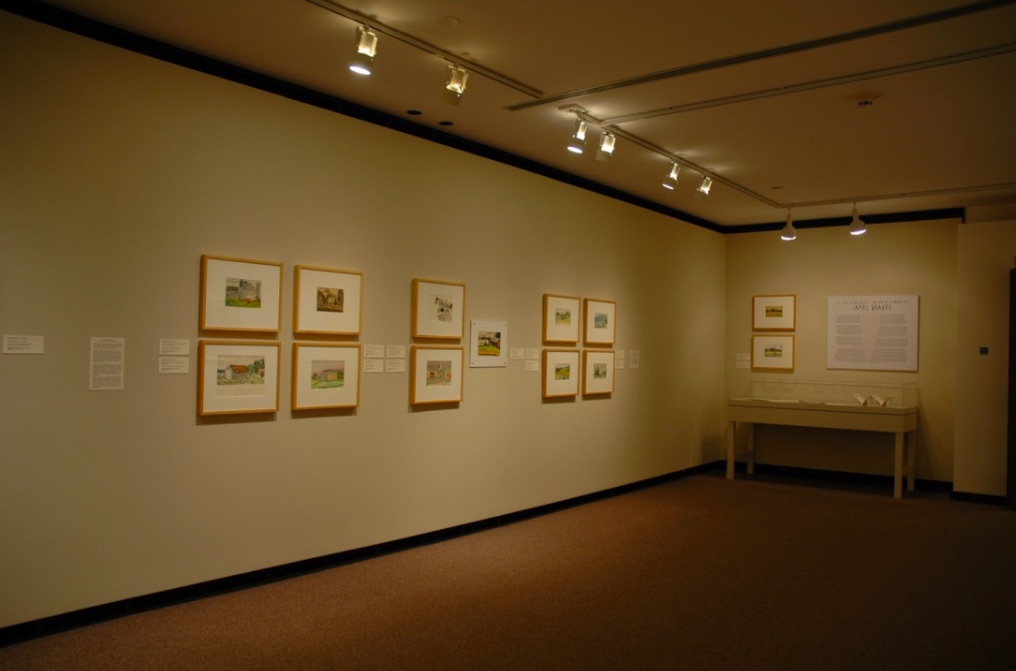
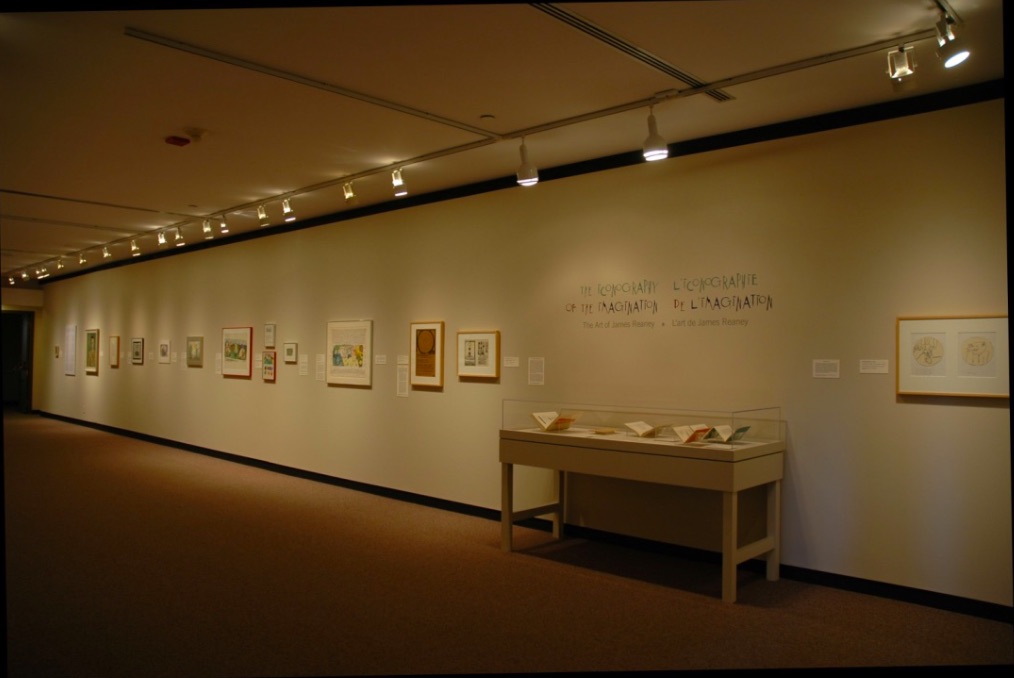
The Iconography of the Imagination: The Art of James Reaney
McMichael Canadian Art Collection, Kleinburg, Ontario January 26 to May 18, 2008
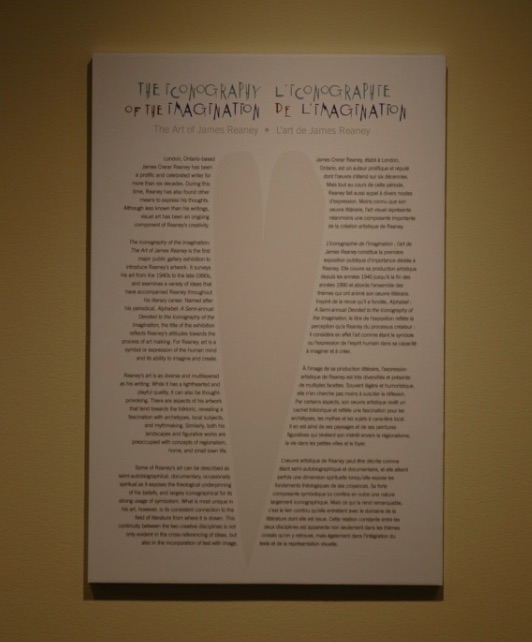
London, Ontario-based James Crerar Reaney has been a prolific and celebrated writer for more than six decades. During this time, Reaney has also found other means to express his thoughts. Although less known than his writings, visual art has been an ongoing component of Reaney’s creativity.
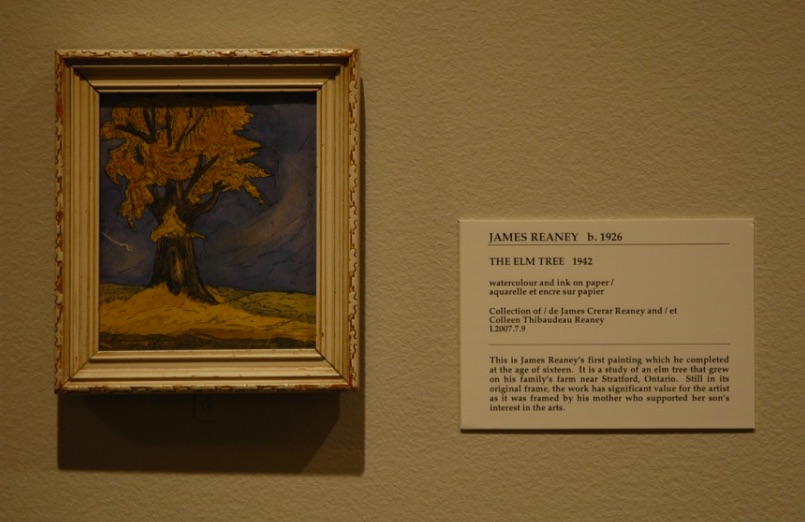
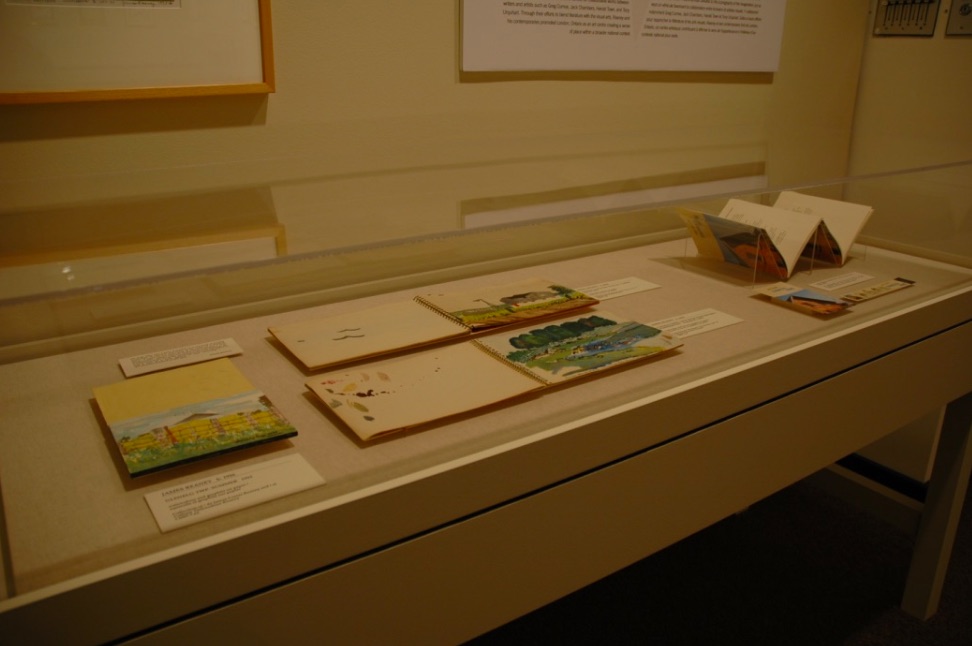
The Iconography of the Imagination: The Art of James Reaney is the first major public gallery exhibition to introduce Reaney’s artwork. It surveys his art from the 1940s to the late 1990s, and examines a variety of ideas that have accompanied Reaney throughout his literary career. Named after his periodical, Alphabet: A Semi-annual Devoted to the Iconography of the Imagination, the title of the exhibition reflects Reaney’s attitudes towards the process of art making. For Reaney, art is a symbol or expression of the human mind and its ability to imagine and create.
Reaney’s art is as diverse and multilayered as his writing. While it has a lighthearted and playful quality, it can also be thought-provoking. There are aspects of his artwork that tend towards the folkloric, revealing a fascination with archetypes, local subjects, and mythmaking. Similarly both his landscapes and figurative works are preoccupied with concepts of regionalism, home, and small town life.
Some of Reaney’s art can be described as semi-autobiographical, documentary, occasionally spiritual as it exposes the theological underpinning of his beliefs, and largely iconographical for its strong usage of symbolism. What is most unique in his art, however, is its consistent connection to the field of literature from where it is drawn. This continuity between the two creative disciplines is not only evident in the cross-referencing of ideas, but also in the incorporation of text with image.
Note from Susan Reaney: This text was written by Tom Smart, Director at the McMichael Canadian Art Collection, 2006-2010. The images below were taken by Linda Morita, Librarian and Archivist at the McMichael Canadian Art Collection, and are used by permission.
〈〈〈♦♥♦〉〉〉 To view the images in sequence, click on one of the images below and then click on the left and right arrow keys.
Photographer: Linda Morita, 2008 Photos courtesy of the McMichael Canadian Art Collection.
On April 6-7, Elizabeth Reaney, James Reaney’s granddaughter, visited the James Reaney Canadian Centre at Gujarat University in Ahmedabad, India. Elizabeth was able to see the Centre’s collection of Canadian literature donated by James Reaney in 1992, and meet some of the students who are using it in their studies.
Dr. Ranjana Harish, Director of the Centre, welcomed Elizabeth and assured her that the collection is well maintained and a valuable resource for scholars and students studying Canadian literature. Elizabeth was pleased to see that the some of the books include her grandfather’s wry marginal comments.
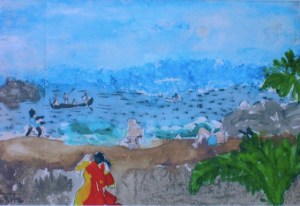
James Reaney visited India in January 1996 and spoke at the Canadian Studies Conference at Kerala University in Trivandrum. He enjoyed a performance of his play, Wacousta, put on by students, and he also painted this watercolour of his visit to the beach near Trivandrum on the Indian Ocean.
Watercolour sketch by James Reaney, January 1996 in Trivandrum











 James Reaney