
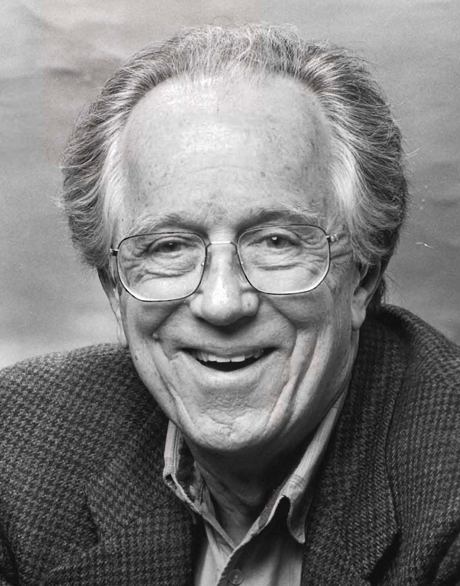
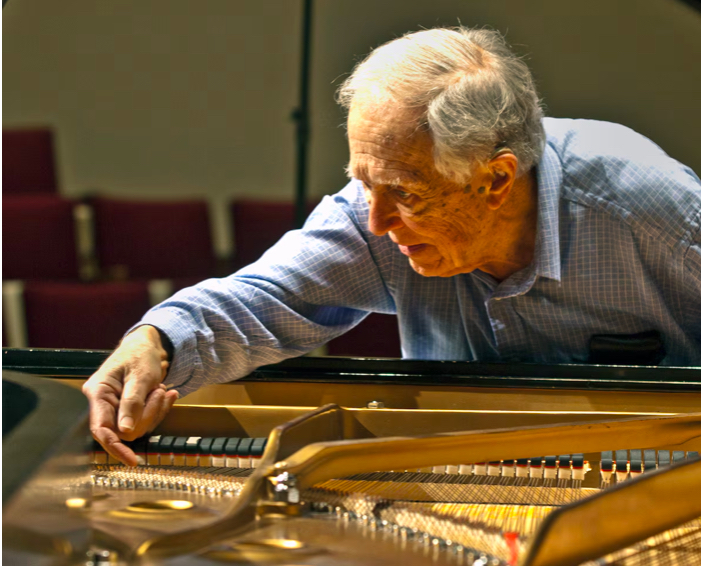
Composer Harry Somers (1925-1999) was commissioned by Lawrence Cherney, Artistic Director of Music at Sharon, to write the music in 1983. The story was to draw on the colonial era history of the Sharon Temple and the Quaker sect the Children of Peace. Seven years later, Serinette was complete and premiered on July 7, 1990 at the Sharon Temple.

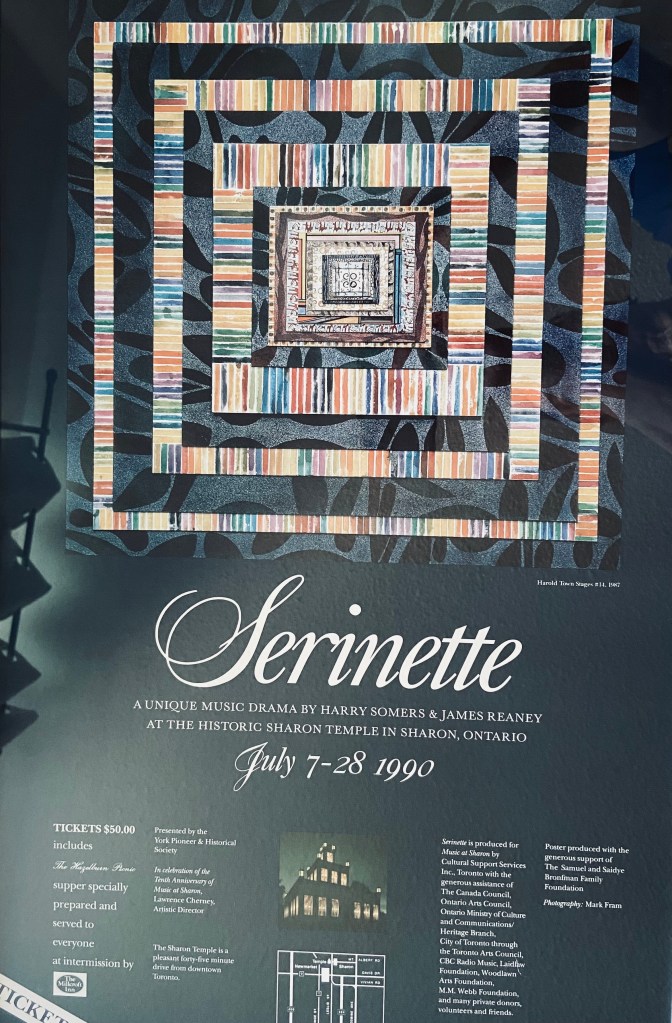
Serinette July 7-28, 1990:
Conductor: Victor Feldbrill, Director: Keith Turnbull
Costume and Set Designer: Sue LePage
Singers: Kristine Anderson, Lynn Blaser, Benjamin Butterfield,
Jeffrey Carl, André Clouthier, Leslie Fagan, John Fanning,
Carol Ann Feldstein, Dennis Giesbrecht, Aline Kutan,
Brian McIntosh, Erik Oland, Jackalyn Pipher, Laura Pudwell
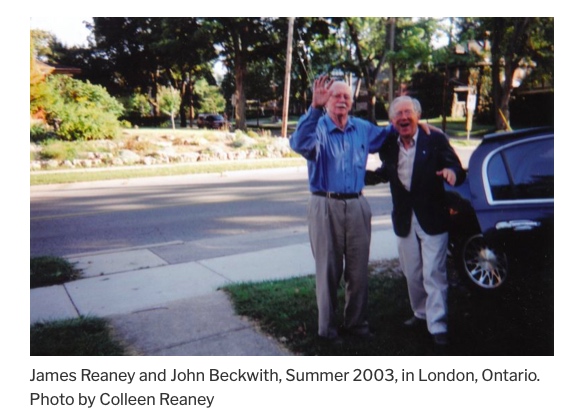
Harry Somers chose James Reaney to write the libretto: “Knowing James Reaney’s plays and his exceptional collaborations with John Beckwith, I was absolutely confident that he would produce a libretto that was suitable for setting to music. I knew that it would be dramatically rich in character and situation, and eminently theatrical. I’ve often been struck by how he uses simple and basic means to achieve a wide variety of theatrical effects, and how he uses a comparatively small cast with the greatest versatility.” [1]
James Reaney first learned about the Sharon Temple and the Children of Peace on a summer visit: “In 1944, while working at a farm labour camp in Holland Marsh, I received permission to walk into nearby Newmarket on business. Curiosity led me to take back roads; I was soon lost, and suddenly a pivot, a spiritual one, whirled into my life. Yes, I had lost my way, but I had also discovered an old square building made of wood and hundreds of panes of glass. It was the Sharon Temple, and as the years went by, its culture and religion became an obsession with me.”
“From John Beckwith, Keith MacMillan and Helmut Kallmann, I learnt that the musical and poetic tradition, as well as the left wing politics, of anglophone Canada started here. This was the site of the first commune based on Christian principles in Ontario, and these people created many original hymns, built the first organ, were the first to educate women in the crafts, and were the first to break down the barrier between artisan and artist. David Willson will always be one of my great folk heroes. [….] So, when Harry Somers asked me to write a libretto about nineteenth century life in Sharon, I leapt at an oft wished project, but decided not to be solemn.” [2]
Notes:
[1] and [3] Harry Somers quoted in Serinette Program Notes, June 3, 1990.
[2] James Reaney quoted in Serinette Program Notes, June 7, 1990.
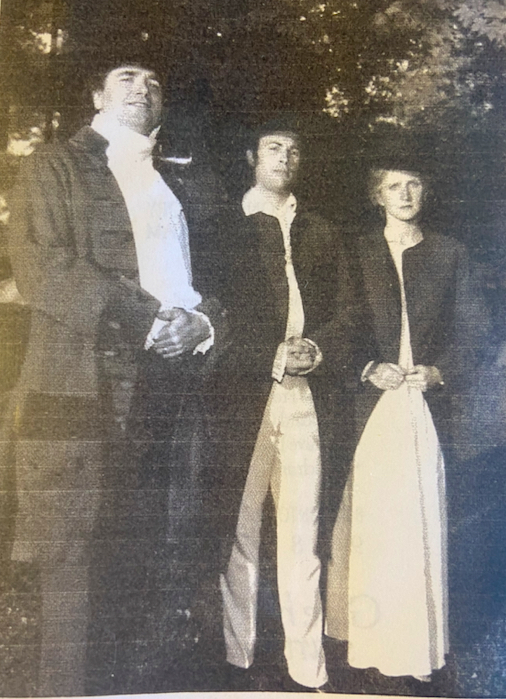


From Act I: Scene 3 The Bird Box
MRS. JARVIS: Mr. Jarvis, don’t let them start dancing. Quiet! I was about to show the ladies how this small barrel organ – the serinette you gave me, remember? – has taught our wild finch over there in that cage to sing Rossini. Sam Junior – take that sheet off that cage. Shhh!
(With great authority, Sam Jr. starts pulling the cover off the cage. The serinette begins to play, but its music goes wild as Sam inadvertently opens the door of the cage and the Bird Girl escapes. From being a bunch of voyeurs around a bird prison, the cast fan out to catch that bird! Improvise or compose chase music here. Colin and Ann do not take part in the chase. Eventually, Sam Jr. catches the bird and she is brutally shoved back into her prison and her cage is covered. As before, Sam Jr. ceremoniously pulls off the cover and as he does so, a singer in yellow dances in and repeats vocally the Rossini aria. Applause. Cover restored. Dancer off.)
LADY TWO: What else can it sing, Mrs. Jarvis?
MRS. JARVIS: A month ago, that bird could not sing a thing worth listening to.
LADY ONE: Oh, play another one, Mrs. Jarvis. Pray do. How many do you have on each barrel? Of this bird box?
MRS. JARVIS: Two per barrel and we got twelve barrels! This is ‘O cessate di piagarmi, togliatemi la vita ancor.’ Hush!
(As the Lilliputian music sounds, the men retreat a bit.)
( ( ( 0 ) ) ) Audio excerpt from the 2001 revival recording
A concert revival of Serinette was held at St. James’ Cathedral, Toronto, Ontario with performances on May 31 and June 2, 2001, and a subsequent recording made at the Glenn Gould Studio is available from the Canadian Music Centre.
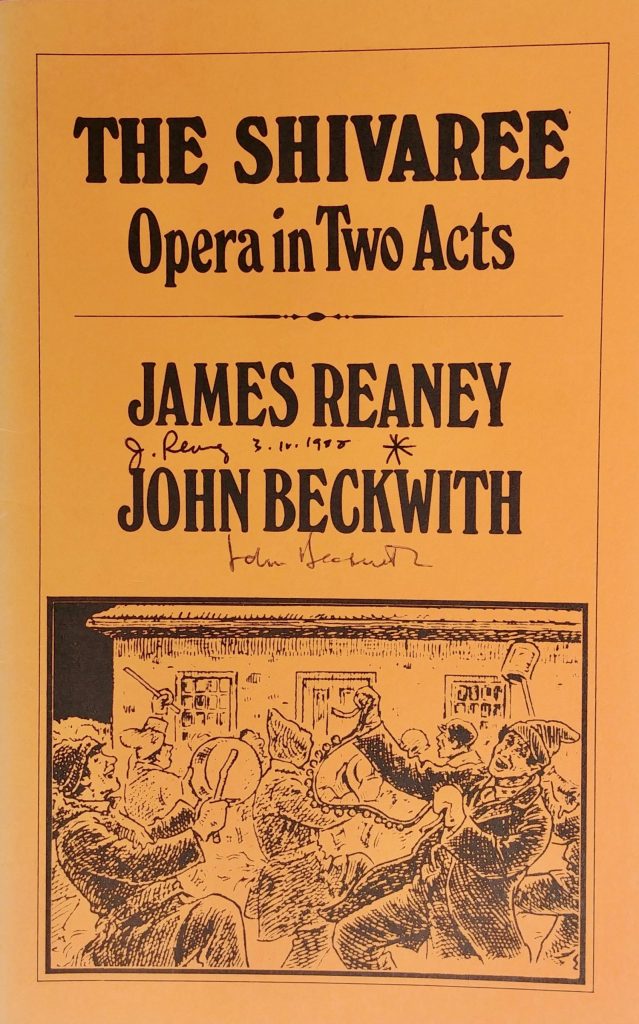
The text for James Reaney’s libretto can be found in Scripts: Librettos for Operas and Other Musical Works, John Beckwith, ed., Coach House Books, 2004.


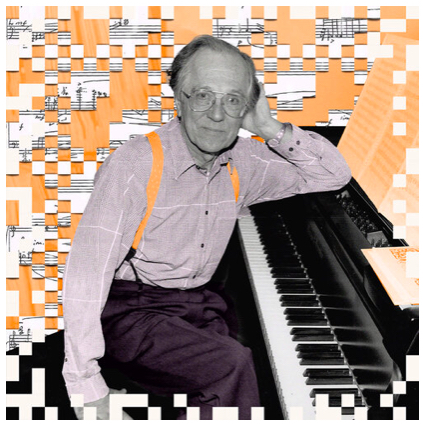






 James Reaney