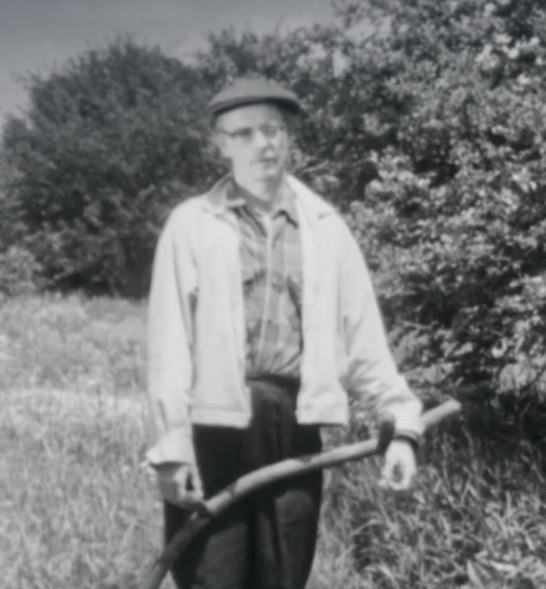
James Reaney at the farm near Stratford, Ontario in 1971 (TVO.org)
The Farm
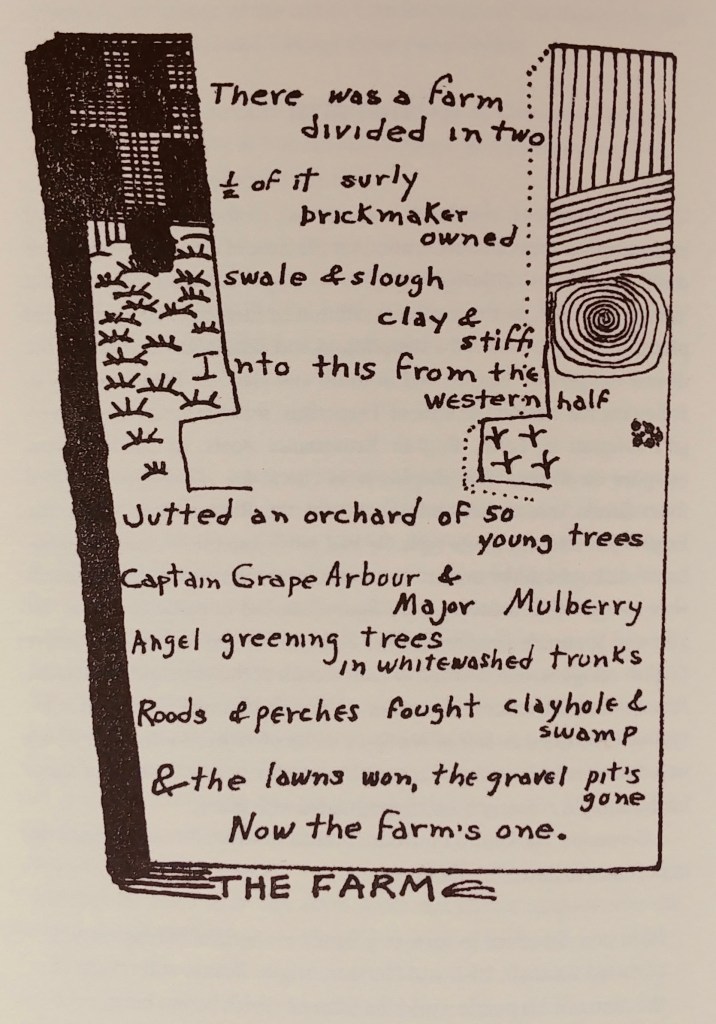
James Reaney’s emblem poem “The Farm” (1969)
( ( ( 0 ) ) ) For more about James Reaney’s poems and a look back at the family farm where James Reaney grew up, see the 1971 TVOntario documentary “James Reaney” in the Canadian Writers series.
The Farm
There was a farm divided in two 1/2 of it surly brick maker owned swale & slough clay & stiff Into this from the western half Jutted an orchard of 50 young trees Captain Grape Arbour & Major Mulberry Angel greening trees in whitewashed trunks Roods & perches fought clayhole & swamp & the lawns won, the gravel pit’s gone Now the farm’s one.
James Reaney, 1969
(Note: “Roods & perches” are land survey measurements.)
2026 — James Reaney’s centenary year — is off to a good start with two plays based on his work from London’s AlvegoRoot Theatre.
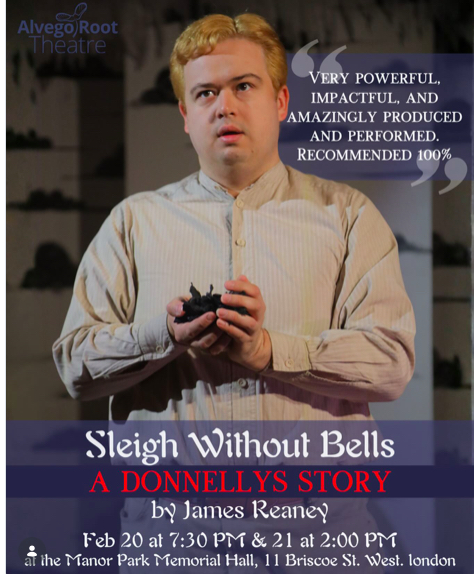
On February 20-21, AlvegoRoot presents two encore performances of Sleigh Without Bells: A Donnellys Story — a short story by James Reaney from The Box Social and Other Stories (1996). Adam Corrigan Holowitz reprises his solo performance as Ephraim, a young traveller lost in a blizzard who strays into Donnelly country. Directed by Kydra Ryan.
AlvegoRoot Theatre reprises James Reaney’s Sleigh Without Bells on February 20-21 in London, Ontario.
Where: The Manor Park Memorial Hall, 11 Briscoe Street W, London, Ontario When:February 20 at 7:30 pm and February 21 at2 pm.
Tickets: $30 at the door or call 519-615-2210 or order online from OnStageDirect.
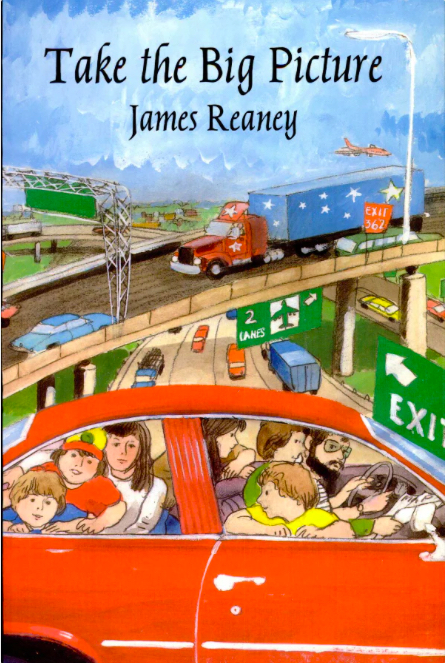
AlvegoRoot’s second Reaney production this year is an adaptation of Take the Big Picture, James Reaney’s 1986 children’s novel. Take the Big Picture will be presented at Fanshawe Pioneer Village from June 10 to June 14.
Cast announcements are expected soonfor Take the Big Picture — an epic tale of six children, their parents, their grandmother, and a host of others. It appears that a sasquatch has followed the Delahay family all the way back to Antler River, Ontario after their year away in British Columbia – but quién sabe?
James Reaney’s children’s novel Take the Big Picture from 1986.
Poems Written About The Donnellys To Assist The Renewal of The Town Hall at Exeter, Highway #4 *
I Around Borrisokane, in Eire, the roads twist After cowherds with willow gads, after wise woman’s spells, After chariots and the widest go-around found in a mare’s skin. But in Biddulph, Canada, in Mount Carmel’s brooder stove, St Peter’s fields, The roads cross at right angles, a careful Euclidean net, roods, rods Spun by surveyors out of Spider stars – Mirzak, Spicula, Thuban, Antares. Like serpents, twitchgrass roots, dragons – the Irish roads twist, The old crooked roads twist in the cage of the straight new.
II We were horsemen, dressed well and from my brother’s entire horse, From his entire horse came the colt fast fleet hoofhand with which We seized and held onto the path through Exeter down to London. We lifted the hills, creeks, rivers, slaughterhouses, taverns, We lifted their travellers and those who were asleep when we passed And those who saw us rattle by as they plowed mud or whittled. We lifted them like a graveldust pennant, we swung them up and out Till they yelled about wheels falling off, unfair competition, yah! And we lie here now – headless, still, dead, waggonless, horseless, Sleighless, hitched, stalled.
III As the dressmaker hems my muslin handkerchiefs, The night the Vigilantes burnt down one of their own barns, As I sit waiting for a cake to bake and my gentle niece with me I realize I am not doing what you want me to do. You – bored with your Calvinist shoes chewed to pieces By streets of insurance, streets of cakemix, packages, soap, sermonettes. You want me to – you project a more exciting me on me. She should be burning! Clip! Ax! Giantess! Coarse, I should curse! Why should I accept these handcuffs from you?
James Reaney, 2005
* Respectively, the three speakers of these poems are William Porte, the Lucan postmaster, Tom Donnelly and Mrs. Donnelly.
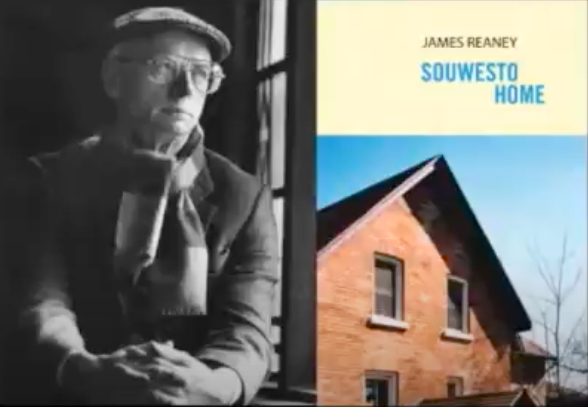
“Entire Horse” is from Souwesto Home, a collection of James Reaney’s poems from 2005 available from Brick Books.
( ( 0 ) )Listen to Jeff Culbert read “Entire Horse” and other poems from Souwesto Homehere.
All three plays from James Reaney’s The Donnelly Trilogy — Sticks and Stones, The St. Nicholas Hotel, and Handcuffs — were performed at the Blyth Festival in 2023 at Blyth’s Outdoor Harvest Stage.
“Are there any more ladies and gentlemen for Calamity Corners as ’tis sometimes called, St. John’s, Birr — my old friend Ned here calls it Bobtown, the more elegant name is Birr. Elginfield known to some as Ryan’s Corners, Lucan that classic spot if it’s not all burnt down, Clandeboye, Mooretown, Exeter and Crediton. If Ned here hasn’t sawn it to pieces, the coach is waiting for you at the front door and it pleases you.”
(Opening lines from James Reaney’s The St. Nicholas Hotel)
Summer 2023 — On the way to the Outdoor Harvest Stage on the old Blyth Fairgrounds. Photo courtesy The Blyth Festival.
James Reaney (left) directing Tomson Highway and others in a scene from Wacousta, Fall 1976 (Image courtesy Western University Archives, James Reaney fonds AFC 18)
In 1976, James Reaney began working on Wacousta!, a new play based on John Richardson’s 1832 novel. Londoners, NDWT actors, and Western students helped develop the play through a series of workshops directed by Reaney at the University of Western Ontario’s Drama Workshop.
Playwright Tomson Highway, who was studying at Western that fall, was a member of the workshop and the Cree language coach for the play. In a later reflection on “Our Own Literature,” he recalls his early days and how the impetus to write plays came from the discovery that other Canadian writers such as Margaret Laurence wrote about what they knew.
“I was born into an oral culture and an oral language (Cree). Up where I come from, caribou country, the extreme far north of the province of Manitoba […] there is no written language, certainly no English, French, or any other European language. […]”
At age 20 while studying at the University of Manitoba, he “…came upon the writings of Margaret Laurence, whose stories took place in Neepawa, Manitoba, mere miles west of Winnipeg, a town I’d travelled through and whose cemetery I’d seen, from a distance many times and I thought that that stone angel in the imagined cemetery (never having seen it up close) must surely be the most magical stone angel in the history of the universe. […]”
“And then later on of course I met him in the flesh – shook his hand! – I met the poet/playwright James Reaney who wrote about London, Ontario where I was going to university. And then there was Michel Tremblay, over in Montreal, with that country-and-western goddess Carmen, singing her songs of love and sorrow on “the Main.”
“Well that was it. I decided that when I grew up I was gonna be like James Reaney and Michel Tremblay and Margaret Laurence and all the rest of them. I was gonna write stories that took place among my people inside the mythology of my people, vibrant, colourful – every bit as vibrant and colourful and passionate (yes, and tragic, sometimes) as people in New York and London (England) and Paris and Moscow. Yes, I decided, we were gonna have our own literature…in Cree.” [Excerpted from Reading Writers Reading: Canadian Authors” Reflections, Danielle Schaub – Photographer and Editor, University of Alberta Press and The Hebrew University Magnes Press, 2006, page 48.]
For more about Tomson Highway and his plays The Rez Sisters, Dry Lips Oughta Move to Kapuskasing, and Kiss of the Fur Queen, see tomsonhighway.ca and the Canadian Theatre Encyclopedia.
For more about the Wacousta Workshops (Fall 1976 to Spring 1977) at Western in London, Ontario, see James Reaney’s play Wacousta![A melodrama in three acts with a description of its development in workshops], Press Porcepic Limited, 1979.
Tomson Highway: lacrosse scene for Wacousta, Fall 1976 (Image courtesy Western University Archives, James Reaney fonds AFC 18)Tomson Highway and others — Wacousta workshops, Fall 1976 (Image courtesy Western University Archives, James Reaney fonds AFC 18)
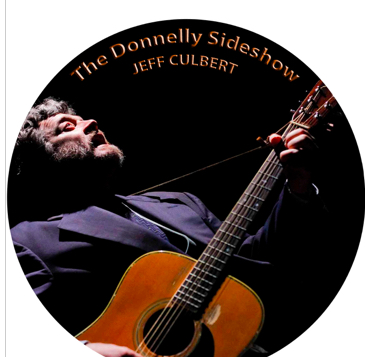
Thanks especially to our wonderful speaker, actor and director Jeff Culbert, who read poems from both One Man Masque and Souwesto Home and played songs from his “Donnelly Sideshow” collection. Jeff also spoke about directing Chris Doty’s play The Donnelly Trialin 2005.
Thanks also to Josh Lambier of Wordsfest for his work as host and guide to an afternoon of tales. Our wonderful audience members shared memories of being in James Reaney’s plays, including productions of One Man Masque at their high schools in North Bay and Sault Ste. Marie. Hilary Bates Neary, local historian and former Listeners’ Workshop member, remembered being in Listen to the Wind in 1966.
Thank you Sarah Caetano and the London Public Library for providing a home for this event. Next year’s lecture will look at poet Colleen Thibaudeau’sLozenges: Poems in the Shapes of Things and its publication by James Reaney’s Alphabet Press in 1965.
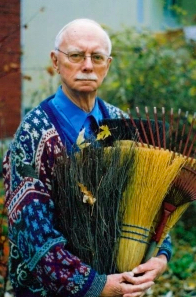
James Reaney in London, Ontario in 2005. Photo by Jeff Culbert.
The James Reaney Memorial Lecture series celebrates the life and work of Southwestern Ontario poet and dramatist James Reaney, who was born on a farm near Stratford, Ontario and found a creative home in London, Ontario.
James Reaney at home in London, Ontario in 2005. Photo by Jeff Culbert.
Join us on Saturday October 19 at the London Public LibraryCentral Branchin the Lawson Room for an afternoon of stories, songs, and memories as actor and director Jeff Culbert recalls his friendship with James (Jamie) Reaney and their collaborations.
Josh Lambier of Wordsfest will be our host and help Jeff recall his roles in the Reaney artistic process. Jeff has also curated selected readings and songs as snapshots on the tour.
Jeff Culbert’s family ties to Lucan and fascination with local lore led to his admiration for James Crerar (Jamie) Reaney’s The Donnellys trilogy, about the murders of an Irish immigrant family by their Lucan-area neighbours in 1880. In turn, Jamie Reaney enjoyed experiencing Lucan alongside Culbert as the two visited such attractions as Lucan heritage days.
“He was interested in my home town. That was so cool,” Culbert says.
Jeff Culbert’s The Donnelly Sideshow
The Donnellys and Lucan were only the start of the Jamie and Jeff friendship. At one point, Jeff was at the night of words and music when Reaney bounced a rubber ball in time to a poem by his wife, the late Colleen Thibaudeau. Reaney was often in the audience for plays with Culbert in the cast or director’s chair or both during London’s alt-theatre excitement in the 1990s and early 2000s. He laughed loudly watching Jeff as a drunken Irish-American police chief in alt-theatre spoof The Boneyard Man.
During that period, Culbert worked closely with Reaney to prepare for Jeff’s starring role in a revival of 1960’s One Man Masque. Jamie Reaney had starred in its debut decades before.
“It isn’t scholarly — but it is scholarly,” Jeff says of the friendship tour.
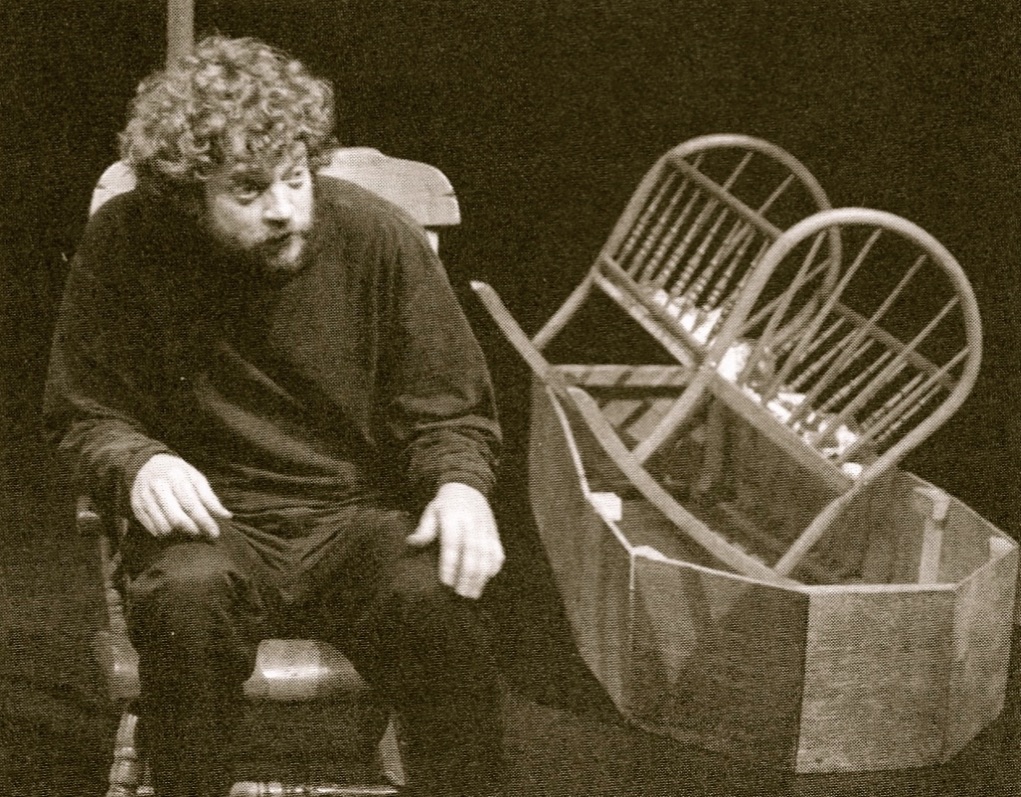
Jeff Culbert in One-Man Masque, Grand Theatre McManus Studio, London, Ontario, 2002
This year’s James Reaney Memorial Lecture celebrates the legacy of London poet and playwright James Crerar (Jamie) Reaney (1926-2008) and his late wife, the poet Colleen Thibaudeau. Our grateful thanks to the London Public Library and Wordsfest for giving the lecture a new home and partnership.
Admission is by donation to The Manor Park Food Bank — non-perishable food or cash accepted. Reserve your seathere. Where: The Manor Park Memorial Hall, 11 Briscoe Street W, London, Ontario
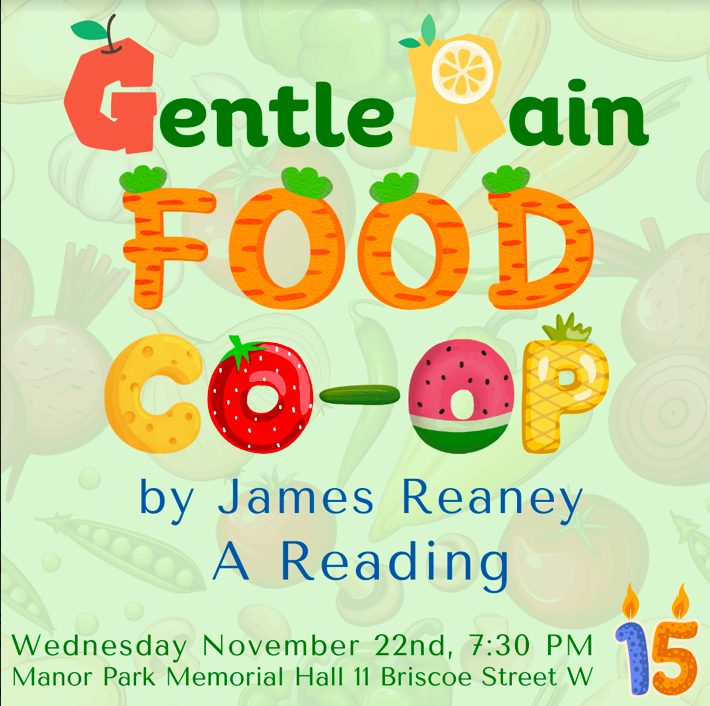
A plot is afoot to change the very DNA of the Gentle Rain Food Co-op !! James Reaney’s comic delight celebrates the eccentricities of community and lampoons fanaticism.
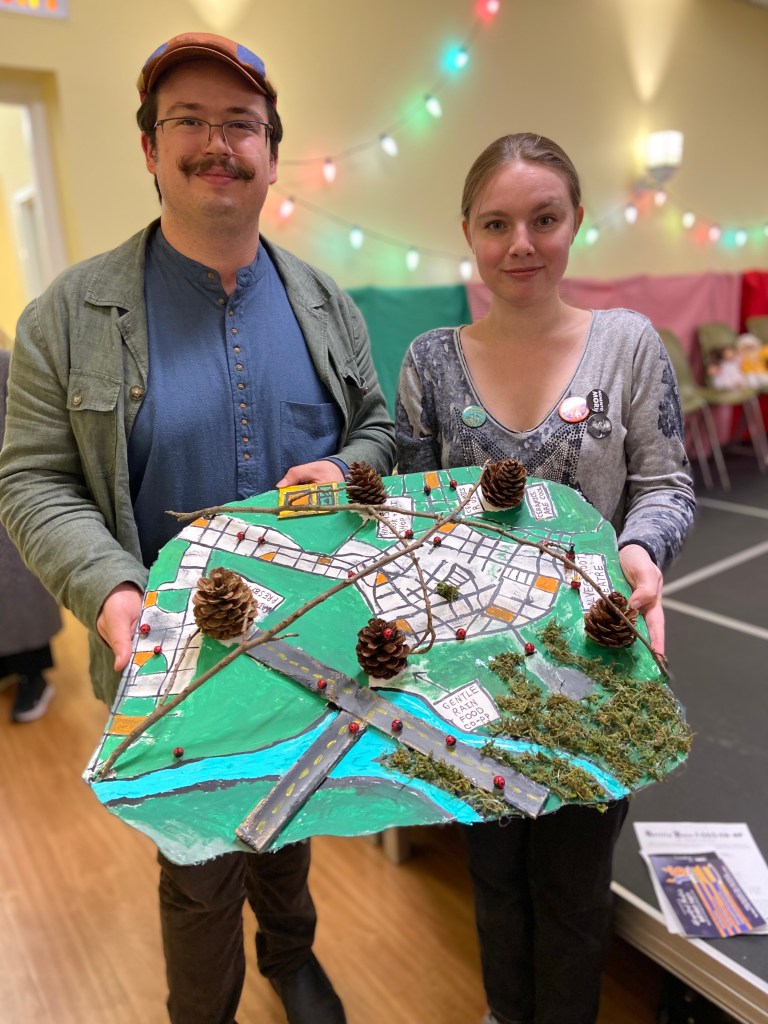
November 22, 2023 —AdamCorrigan Horowitz and Kydra Ryan in Gentle Rain Food Co-op: Evil Professor Skimwater commissions a model of St. David’s Ward from unsuspecting Jones: “By the way, Jones, my graduate class is waiting next door. I wonder if you’d mind brining your model of St. David’s Ward in for me so they can have a look at it too?”
Join us on November 5, 2023 at Wordsfest at Museum London for the 14th annual James Reaney Memorial Lecture — The Beckwith Connection: An Afternoon of Big Hits from the Reaney & Beckwith Songbook.
Curated by London soprano Katy Clark, the 2023 Reaney Memorial Lecture celebrates playwright and poet James Reaney’s collaborations with a great Canadian composer, the late John Beckwith (1927-2022). Katy Clark leads a chamber ensemble into wonderful music from Beckwith as well as words from James Reaney (Jamie) and Colleen Thibaudeau. We will also celebrate the friendship of two creative couples – Jamie and Colleen and John Beckwith and Pamela Terry, as well as their families. Katy will be joined by London Pro Musica Choir, Paul Grambo, and guest artists.
Beckwith wrote four operas with Reaney, whom he met at the University of Toronto in the late 1940s. They shared a deep interest in creating and telling authentically Canadian stories with local references – both literary and musical – and universal messages.
Four Beckwith-Reaney operas: Night-blooming Cereus (1960), The Shivaree (1982), Crazy to Kill (1989), and Taptoo! (2003)Screenshot
About the presenter Soprano Katy Clark has sung as a soloist and chorister with companies across North America. She is a DMA candidate at the University of Toronto, where she studies with Nathalie Paulin, and holds a Masters degree in Voice Performance from the University of Michigan. In addition to her work as a performer, Ms. Clark is the founder and artistic producer of the London-based opera company Village Opera.
When: Sunday November 5 at 2:00 pm
Where: Museum London, 421 Ridout Street, London, Ontario N6A 5H4
Night-blooming Cereus revival by Opera Nova at the University of Victoria, 1992
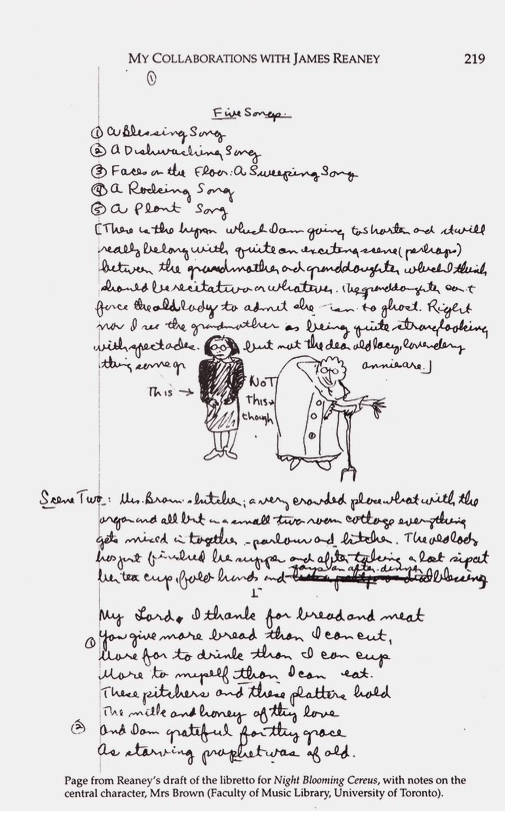
Night Blooming Cereus, a chamber opera in one act, is one of several musical collaborations between poet and playwright James Reaney(1926-2008), who wrote the libretto, and composer John Beckwith (1927-2022).
“Furthering my ambition to compose an opera, I had the great good luck to find a librettist — a writer who understood music. James Reaney shared my love of opera, and early in our friendship in student days we spoke of perhaps collaborating on an original work. In early 1953 I received from him a draft of Night Blooming Cereus. The one-act opera he imagined taking shape as a sort of southern Ontario miracle play. It turned out to be the first of four operatic works we produced together over succeeding decades…”[1]
“[…] We worked on it slowly through the mid-1950s, almost entirely by correspondence, while starting to raise families and work on tenure, he in Winnipeg and I in Toronto. No one seemed interested in staging it, but we were fortunate that CBC Radio offered a broadcast production, and, encouraged by its success, repeated it the following year. In the season 1959-60 we were supported by a small committee of friends to raise funds for a live staging of our own.”[2]
James Reaney describes meeting the demands of the composer for more variety of metre in the draft libretto of Night Blooming Cereus as being “galvanized into, at the time and for me, incredible labours of counting syllables, making parallel lines exactly the same length and finding good clean, clear and sonorous rhymes… From those Manitoba fall nights…I date my birth as a craftsman in words.” [3]
“Night Blooming Cereus” image by designer Louis de Niverville, Toronto,1960.
In Scene 2 of the opera, lonely Mrs Brown tends to her house and her Night-blooming cereus, which is due to flower that evening.
(The dishes are put away, the cupboard door closed, the dishwater somehow disposed of. She gets the broom from behind the stove.)
SWEEPING Look at the faces on the floor In the wood of the boards they are Faces of dust I sweep with a broom, Sweeping the dust in this room. Sweeping sweeping sweeping sweeping Has a sound like weeping If I kept all the dust I’ve swept It would be she I have wept Whose face appears more often than not In the dust and the fire and the knot, And the blowing rain on the window And the tree branches’ shadow Contain your face there! and again there! My lost girl in dust in the air. But it is best to go on sweeping Over the faces better than weeping. Here is the face of an old man peeping. Here is the face of a young man reaping. Here is the face of an old woman sweeping.
(A bit tired with so much activity, she sits in the rocking chair.)
ROCKING Rocking rocking, rocking rocking Very very slowly What I have been doing rocking, Most of my life lately.
Sewing at a shirt or stocking As quickly as I can And what the people to me bring I sew at while rocking
Like selling footsteps to all houses My stitches go through cloth Of caps and nightgowns and blouses Dresses, handkerchiefs and vests.
I sew for everyone here, I the restless stillness, My thread looks through cloth for tear And the butcher’s apron.
The sewing connects each one To myself except for her. She walks about beneath the sun Without my sewing snow.
As the white snow fills fields and lanes, Till they cover me all. Upon my old and long-used bones Rocking and sewing fall.
Page from Reaney’s draft of the libretto for Night Blooming Cereus (see John Beckwith’s 1997 book, Music Papers: Articles and Talks by a Canadian Composer, page 219)
Summer 2023: Sticks and Stones at Blyth’s Outdoor Harvest Stage (Photo courtesy The Blyth Festival)
Part I: STICKS & STONES Friday August 4 Tuesday August 8 Friday August 11 Tuesday August 15 Friday August 18 Tuesday August 22 Friday August 2 Tuesday August 29 Friday Sept 1
Part II: THE ST. NICHOLAS HOTEL Saturday August 5 Wednesday August 9 Saturday August 12 Wednesday August 16 Saturday August 19 Wednesday August 23 Saturday August 25 Wednesday August 30 Saturday September 2
Part III: HANDCUFFS Thursday August 3 Sunday August 6 Thursday August 10 Sunday August 13 Thursday August 17 Sunday August 20 Thursday August 24 Sunday August 27 Thursday August 31 Sunday September 3
Part I: STICKS & STONES Friday August 4 Tuesday August 8 Friday August 11 Tuesday August 15 Friday August 18 Tuesday August 22 Friday August 2 Tuesday August 29 Friday Sept 1
Part II: THE ST. NICHOLAS HOTEL Saturday August 5 Wednesday August 9 Saturday August 12 Wednesday August 16 Saturday August 19 Wednesday August 23 Saturday August 25 Wednesday August 30 Saturday September 2
Part III: HANDCUFFS Thursday August 3 Sunday August 6 Thursday August 10 Sunday August 13 Thursday August 17 Sunday August 20 Thursday August 24 Sunday August 27 Thursday August 31 Sunday September 3










 James Reaney